Training in the First Trimester Before Anyone Knows: Questions Answered
Quick Answer: The first trimester is usually the hardest to train through and the one you can explain least. Fatigue and nausea are at their peak while nothing is visible, so scale by symptoms rather than by any rule about weeks. Reduce volume before intensity, keep sessions short, and use heat and nausea as your limits. Most people can continue what they were already doing, at a reduced dose — but get individual clearance, because this is general information, not medical advice.
Nobody warns you about this bit properly.
You feel like you have the flu, you are asleep by 8pm, you cannot face the gym you have been going to for years — and you cannot tell a single person why, because it is week seven and you have decided to wait.

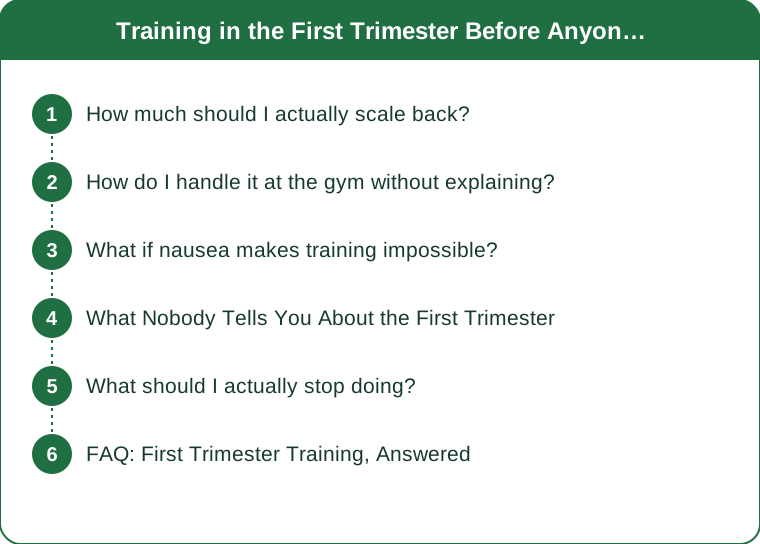
How much should I actually scale back?
Cut volume first, keep some intensity, and let symptoms rather than weeks set the number.
The standard guidance for an already-active person is that you can generally continue your existing activities in early pregnancy. What that guidance underplays is how you will feel, and feeling terrible is a legitimate reason to do less.
A workable default: cut total volume by 30 to 50 percent and keep the structure. Three sets become two. A 45-minute session becomes 25. Five days become three. The pattern of your training stays recognisable, which matters more for the habit than the numbers do.
Keep some intensity, within reason. Dropping to only gentle work often makes people feel worse rather than better, and there is no evidence that moderate effort in an uncomplicated pregnancy is a problem. The thing to abandon is maximal effort and anything involving breath-holding under heavy load, not effort in general.
Do not scale by week number. Some people feel fine at nine weeks and awful at eleven. The calendar is not the variable; how you feel that morning is.
How do I handle it at the gym without explaining?
Change the framing rather than the behaviour, and pick reasons that need no follow-up.
Most gym environments require no explanation at all. Where one is expected — a class, a training partner, a coach — a few things work:
Deloading. Universally understood, requires no elaboration, and is completely true in effect. I am on a deload week covers a great deal and nobody ever asks a second question.
A minor niggle. My back has been grumbly, taking it easy. Low-key, common, invites sympathy rather than curiosity.
Being busy or tired. Sleep has been terrible, keeping it light. Also true.
Practical adjustments that do not look like anything: taking longer rest periods, choosing machines over free weights, working in a cooler part of the gym, keeping a water bottle permanently in hand. None of these read as unusual.
One genuine consideration: tell your coach earlier than you tell others if you work with one. A coach who does not know will keep programming for progression, and the alternative — refusing sessions repeatedly with no reason — is more conspicuous than a quiet conversation.
What if nausea makes training impossible?
Then train around it rather than through it, and accept that some weeks are maintenance at best.
Time it to your best window. Nausea has a rhythm for most people — often worse on an empty stomach and in the morning, though evening nausea is common too. Whatever your good window is, put training in it, even if it is not when you normally trained.
Eat something small beforehand. An empty stomach reliably makes nausea worse. Something plain, 30 to 60 minutes ahead, is usually better tolerated than either fasting or a full meal.
Stay cool. Overheating amplifies nausea considerably. A cooler room, a fan, lighter clothing, and shorter sessions all help more than they should.
Change the modality. Walking outdoors is tolerated by many people who cannot face a gym. Resistance work is often better tolerated than cardio, because it involves less sustained breathing effort and less heat.
And accept the write-off weeks. Weeks six to ten are the peak for many people, and doing very little through them costs almost nothing in the long run. Maintaining the habit of showing up matters far more than the content of any individual session — a ten-minute walk keeps the thread intact.

What Nobody Tells You About the First Trimester
You will feel worse than you will look, by a wide margin. There is no visible sign and no social permission, and the mismatch between how rough it is and how normal you appear is genuinely difficult. It is not weakness; it is the single most metabolically disruptive stretch of the whole pregnancy.
Your heart rate will be higher at the same effort, from very early on. Blood volume starts increasing in the first trimester, and resting heart rate commonly rises by 10 to 15 beats per minute. This makes heart-rate-based training zones misleading almost immediately. Switch to rating of perceived exertion or the talk test — if you cannot hold a conversation, ease off.
Breathlessness arrives before the bump does. Progesterone changes your breathing pattern early, and many people notice they are puffing on stairs in week eight. It is normal and it is not deconditioning.
Heat regulation changes early too. You will overheat faster, and staying cool is one of the few genuinely evidence-supported precautions for early pregnancy exercise. Avoid hot yoga, saunas, and training in high heat.
The second trimester is usually much better. For a large majority, energy returns around weeks 13 to 16 and training becomes enjoyable again. Knowing that in week nine helps.
What should I actually stop doing?
A short list, most of which has nothing to do with how hard you are working.
Overheating. Hot yoga, saunas, hot tubs, and prolonged exercise in high heat. This is the most consistently supported precaution in early pregnancy and it deserves to be taken seriously.
Maximal effort with breath-holding. Heavy singles with a valsalva create large intra-abdominal pressure spikes. Moderate loads with normal breathing are fine; grinding maximal attempts are worth setting aside.
Contact sports and high fall risk. Less about the first trimester specifically and more about establishing habits early — anything with a meaningful chance of a hard fall or a blow to the abdomen.
Scuba diving. Contraindicated throughout pregnancy, unambiguously.
Training through warning signs. Bleeding, cramping, dizziness, chest pain, or fluid leakage mean stop and contact a professional, regardless of how minor it seems.
Notably not on the list: lifting weights, running if you already ran, elevating your heart rate, or training abs in a reasonable way. Much of what people abandon in the first trimester out of caution has no evidence behind stopping it — and stopping unnecessarily has its own costs, since staying active is associated with better outcomes across the whole pregnancy.
Get individual guidance. Conditions, history, and complications change all of this, and this article is general information rather than medical advice.
FAQ: First Trimester Training, Answered
Is it safe to keep lifting the same weights I was?
For an uncomplicated pregnancy in someone already training, generally yes in the early weeks, though most people naturally reduce as fatigue builds. The usual adjustment is fewer sets rather than lighter weights. Confirm with your own provider.
Should I keep my heart rate under 140?
That guidance was withdrawn years ago and is no longer standard. Perceived exertion and the talk test are the current approach, partly because resting heart rate rises so much in early pregnancy that any fixed number becomes meaningless.
I have stopped entirely for three weeks and feel guilty. Does it matter?
Very little. Three quiet weeks in the first trimester is extremely common and has minimal long-term impact. Restarting gently when energy returns is completely normal, and beating yourself up over it achieves nothing.
When will I have to tell people at the gym?
Later than you expect. Most people are not visibly pregnant in a gym setting until around 16 to 20 weeks, and by then the first trimester symptoms have usually resolved and the conversation is much easier.
TL;DR:
- The first trimester is typically the hardest to train through and the one with the least visible explanation — scale by symptoms, not by week.
- Cut volume by 30 to 50 percent, keep the structure, and drop maximal effort and breath-holding rather than effort in general.
- Heat is the precaution that matters most; heart rate zones stop being useful almost immediately as resting heart rate rises.
- Write-off weeks cost very little, and a ten-minute walk keeps the habit alive.
If this week is a bad one, the goal is not a workout. It is going outside for ten minutes so the thread stays intact. That is enough. This is general information rather than medical advice — check anything specific with your own provider.
See It in Motion
Seen here: Maternity Capris with Side Pockets — shop it on bubblelime.com
Keep Reading
This article is for general informational purposes only and is not medical advice. It is not a substitute for professional diagnosis or treatment. Always consult a qualified healthcare provider about your individual situation, especially before making significant changes to your diet or exercise routine.