Exercising in Hot Weather While Pregnant: Questions Answered
Quick Answer: Pregnancy makes you run warmer at rest, sweat differently, and carry more blood volume, so heat is genuinely more demanding than it was. Current guidance supports continuing exercise in pregnancy, with sensible heat precautions - the concern is core temperature rising substantially and staying there, not any warmth at all.
Practically: train early or late, keep it conversational in the heat, hydrate more than feels necessary, and stop for the specific warning signs rather than pushing through.
Everything below is general information, not medical advice - your own care team knows your situation and their guidance takes precedence.
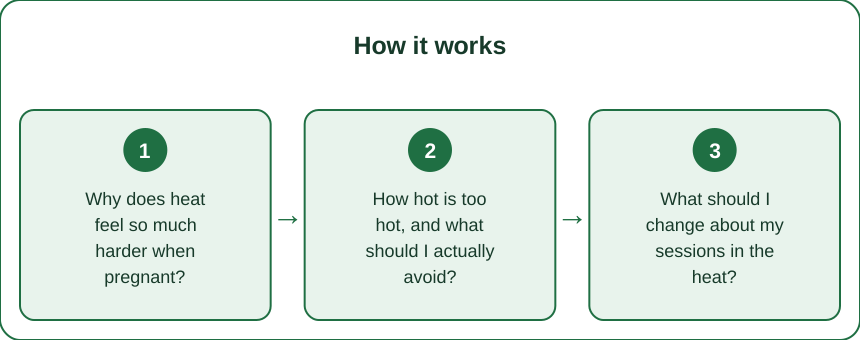
Why does heat feel so much harder when pregnant?
Several changes stack up, and most of them start early.
Your baseline temperature is higher. Progesterone raises resting body temperature slightly, so you start every session from a warmer point than you used to.
Blood volume increases substantially. By the third trimester, blood volume is up by roughly 40 to 50 percent, and the cardiovascular system is working harder at rest. Your heart rate at any given effort is higher than it was, which is normal and also means the usual heart rate targets are not meaningful.
More heat is being produced. The placenta and growing baby generate heat continuously, which your body has to shed on top of whatever exercise adds.
Blood vessels dilate more. Pregnancy increases peripheral vasodilation, which is helpful for cooling and also contributes to feeling flushed, to swelling, and to lightheadedness on standing.
And fluid needs are higher. Plasma volume, amniotic fluid, and increased sweating all raise requirements, so the same drinking habits leave you further behind than they used to.
The reassuring context: your body does adapt - sweating actually begins at a lower temperature threshold in pregnancy, which is a genuine cooling advantage. The system is working harder and it is also better tuned for it.
How hot is too hot, and what should I actually avoid?
The concern in the research is sustained elevated core temperature, and the commonly cited threshold is around 39°C (102°F) - particularly in the first trimester.
What the evidence suggests about exercise specifically. Studies measuring core temperature during moderate exercise in pregnancy have generally found that it does not approach the concerning threshold in reasonable conditions. Moderate exercise in a temperate environment appears to be well within safe limits, which is why guidelines encourage it.
What raises more caution:
- Hot yoga and hot pilates. Deliberately heated rooms are the clearest thing to avoid, because the environment prevents the cooling that normally protects you
- Saunas, steam rooms, and hot tubs. Passive heating with no ability to cool - most guidance advises avoiding these, particularly in the first trimester
- Prolonged high-intensity work in genuine heat and humidity, where evaporation is limited
- Midday training in a heatwave
What is generally fine with sensible precautions:
- Walking, swimming, cycling, and strength training in reasonable conditions
- Moderate intensity where you can hold a conversation - the talk test is the most practical intensity guide in pregnancy, since heart rate targets are unreliable
- Outdoor exercise in the early morning or evening
Swimming deserves a specific mention. Water removes heat far more efficiently than air, supports the extra weight, and reduces joint load. For late-summer pregnancy it is close to an ideal option, provided the pool is not heated to a therapy temperature.
What should I change about my sessions in the heat?
Most of this is scheduling and pacing rather than changing what you do.
Timing:
- Train before 9am or after 6pm. The single most effective change and it costs nothing
- Move indoors to air conditioning when outdoor conditions are poor
- Shorten rather than skip. A 20-minute early walk beats a cancelled 45-minute session
Intensity:
- Use the talk test throughout. If you cannot speak in full sentences, ease off - this is the practical standard recommended in pregnancy guidance
- Expect your usual paces to feel harder and accept that. It is not a fitness loss
- Take longer rests between sets than you would have before
Hydration:
- Drink before you start, not just during
- Roughly 200 to 300ml every 15 to 20 minutes during exercise in the heat, adjusted to conditions and thirst
- Add electrolytes for sessions over an hour or in high heat
- Check urine colour - pale straw is the target
Clothing and environment:
- Light-coloured, loose, moisture-wicking fabrics. Cotton stays wet and stops cooling you
- A supportive maternity sports bra, which becomes more important as the pregnancy progresses
- Shade, and a route with water available
- A cool shower or a cold flannel on the neck afterward
And a practical point about swelling: hot weather worsens the ankle and hand swelling that is already common in pregnancy. Elevating your legs after exercise, and compression socks for longer sessions, both help meaningfully.
What are the actual warning signs to stop?
These are worth knowing precisely, because in the heat some of them arrive faster than you would expect.
Stop exercising and seek advice for any of the following:
- Dizziness, feeling faint, or a headache that comes on during exercise
- Chest pain or noticeable shortness of breath before exertion
- Calf pain or swelling on one side
- Vaginal bleeding, or fluid leaking
- Regular painful contractions
- Reduced fetal movement
- Stopping sweating while still feeling hot, confusion, or nausea with a rapid pulse - these are heat illness signs and need immediate attention, not a rest
Signals to ease off rather than stop entirely:
- Feeling unusually flushed or unable to cool down after finishing
- A heart rate that stays elevated well after you stop
- Feeling worse rather than better an hour later
- Sleep disrupted by the session
Two things worth knowing about pregnancy specifically:
- Lying flat on your back for extended periods becomes less comfortable and is generally discouraged after the first trimester, because the uterus can compress a major vein and reduce blood return. Incline or side-lying alternatives exist for most exercises
- Relaxin increases joint laxity, so range of motion may feel greater than it should. Working to comfortable range rather than end range is the sensible standard
And the overarching point: your obstetrician, midwife, or physiotherapist knows your specific pregnancy - any condition, complication, or individual factor changes this advice. Bring the questions to them rather than to the internet, and treat everything here as general background rather than personal guidance.
FAQ: Hot Weather Pregnancy Exercise Questions, Answered
Can I keep running through summer if I ran before?
Many people do, with modifications - guidance generally supports continuing an activity you were already doing, with intensity, timing, and duration adjusted. Pelvic girdle pain and pelvic floor symptoms are the usual reasons to switch to walking or swimming rather than heat itself.
Is a warm bath after exercise a problem?
A warm bath is different from a hot tub - the concern is sustained immersion in genuinely hot water, which raises core temperature and does not allow cooling. A comfortably warm bath that does not make you sweat is generally considered fine, and your care team can give you a specific answer.
Should I use a heart rate monitor to stay in a safe zone?
Heart rate targets are unreliable in pregnancy because resting heart rate rises substantially and the increase varies between people. The talk test is the more practical and more widely recommended guide.
What if I overheated before I knew I was pregnant?
This is an extremely common worry and worth raising with your midwife or doctor, who can give you a proper answer for your situation. Most guidance around heat exposure concerns sustained high temperatures rather than a single warm session.
TL;DR:
- Pregnancy raises baseline temperature, blood volume, and heat production, so heat is harder
- The concern is sustained core temperature above roughly 39°C - moderate exercise rarely reaches it
- Avoid hot yoga, saunas, and hot tubs; swimming is close to ideal in late summer
- Train early or late, use the talk test, hydrate more, and wear light wicking fabrics
- Know the stop signs - dizziness, bleeding, one-sided calf pain, or stopping sweating
Move your next session to before 9am and use the talk test throughout. That covers most of what matters, and take anything specific to your care team.
See It in Motion
Seen here: Maternity Capris with Side Pockets — shop it on bubblelime.com
Keep Reading
This article is for general informational purposes only and is not medical advice. It is not a substitute for professional diagnosis or treatment. Always consult a qualified healthcare provider about your individual situation, especially before making significant changes to your diet or exercise routine.