How Do You Know If Your Pelvic Floor Is Too Tight During Pregnancy?
Quick Answer: An overactive or tight pelvic floor can cause leaking, pain with intercourse, difficulty starting urination, constipation, and a sensation of pressure - symptoms that overlap heavily with weakness. The key distinguishing signs are pain, difficulty relaxing, and symptoms that get worse rather than better with Kegels. If Kegels make things worse, stop and get assessed by a pelvic floor physical therapist.
The pelvic floor needs to relax as well as contract, and birth requires the relaxing part.

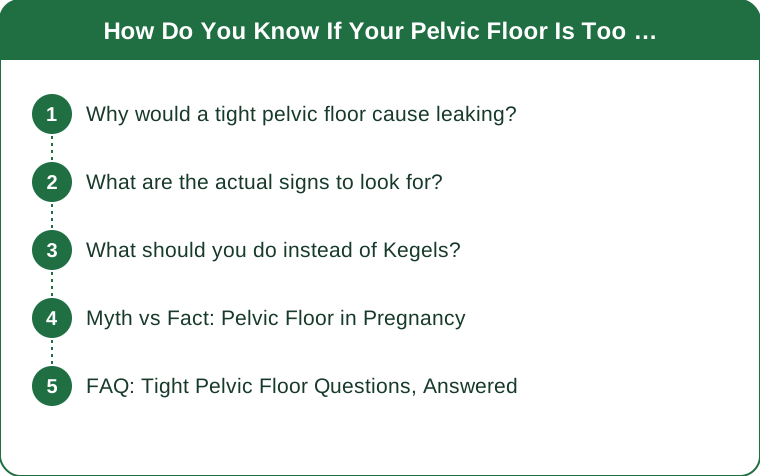
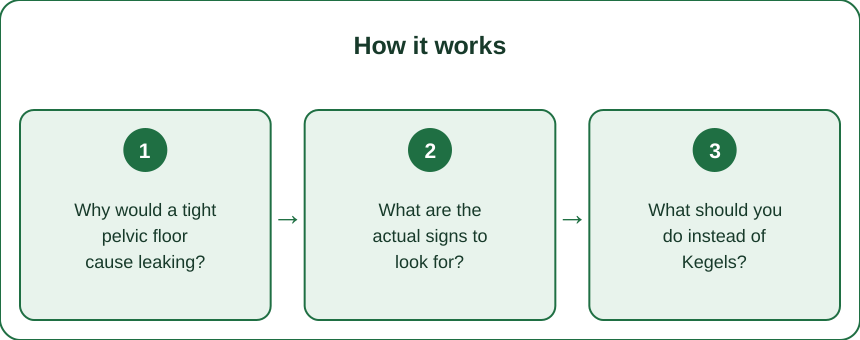
Why would a tight pelvic floor cause leaking?
Because a muscle held in constant partial contraction has nothing left to give when it is suddenly needed.
The pelvic floor works like any other muscle group. It has a resting tone, it contracts to close off the urethra and support the organs, and it relaxes to allow urination, bowel movements, and - crucially - birth.
An overactive pelvic floor sits at a raised resting tone. It is partly contracted all the time. Two consequences follow:
It cannot contract further when needed. When you cough or jump, the pelvic floor needs a fast additional contraction on top of its resting state. A muscle already near the top of its range has no reserve, so you leak. This looks identical to weakness from the outside, and the treatment is the opposite.
It fatigues. Constant low-level contraction is tiring, and a fatigued muscle performs the fast reflexive contraction poorly. This is why symptoms often worsen through the day.
There is also a coordination issue. A tight pelvic floor frequently comes with a habit of bracing - gripping the abdominals and pelvic floor together, holding the breath, and never fully releasing. That pattern is often a response to pain, anxiety, or a history of holding on, and it becomes automatic.
In pregnancy, this matters for a specific additional reason: the second stage of labour requires the pelvic floor to lengthen and release. A pelvic floor that cannot relax makes that stage harder and is associated with more tearing. Which is why the standard everyone-should-Kegel advice is genuinely poor guidance for this group.
What are the actual signs to look for?
Pain is the clearest distinguishing feature, and it appears in several forms.
Signs pointing toward a tight or overactive pelvic floor:
- Pain with intercourse, or with tampon insertion, or during a pelvic exam
- Difficulty starting urination, or a slow, hesitant, or interrupted stream
- A feeling of incomplete emptying after urinating
- Constipation and straining, particularly with a sensation of needing to go but being unable to release
- Pelvic, hip, tailbone, or low back pain without an obvious injury
- Urgency and frequency - going often, with a sense of not being able to wait
- A sensation of pressure or fullness in the pelvis
- Symptoms that worsen when you do Kegels. This is the single most useful signal available to you.
Signs pointing more toward weakness:
- Leaking with cough, sneeze, laugh, or impact, without pain
- A sensation of heaviness or bulging, particularly late in the day
- Difficulty feeling any contraction at all when you try
- No pain anywhere in the picture
The complicating truth: many people have both. A pelvic floor can be tight and weak simultaneously - a shortened muscle that is also not strong through its range. This is common, and it is exactly why self-diagnosis has limits. The sequence in that case is release first, then strengthen, and doing it in the wrong order makes things worse.
The self-test that is actually useful: try a Kegel. Contract, then fully release, and notice whether the release is as clear and complete as the contraction. If you can contract but cannot feel a distinct letting go, that points toward overactivity. If contracting produces pain, stop and get assessed.

What should you do instead of Kegels?
Down-training - work that teaches the pelvic floor to lengthen and release.
Diaphragmatic breathing, which is the foundation. The diaphragm and pelvic floor move together. On an inhale, the diaphragm descends and the pelvic floor lengthens; on an exhale, both recoil upward. Slow breathing with a focus on the inhale is direct pelvic floor lengthening work, and it is the single most useful thing to start with.
How: lie on your side or sit supported. Hand on the belly. Inhale through the nose for 4 counts, feeling the belly and ribs expand and imagining the pelvic floor softening downward. Exhale gently for 6. Five to ten minutes, once or twice daily. The longer exhale matters because it engages the parasympathetic system, which reduces overall muscle tone.
Positions that encourage lengthening:
- Child’s pose with knees wide, breathing into the back and pelvis
- Happy baby, modified in later pregnancy with a wider stance
- Deep supported squat with a block or cushion under the seat - excellent birth preparation as well
- Side-lying with a pillow between the knees, breathing slowly
Daily habits that reduce tone:
- Stop hovering over the toilet seat. It prevents the pelvic floor releasing and is a genuine contributor.
- Do not push or strain for bowel movements. Use a footstool to raise the knees above the hips, lean forward, and breathe out.
- Notice clenching. Many people hold their pelvic floor and glutes throughout the day without any awareness of it. Set a phone reminder to check and release.
- Stop the just-in-case bathroom trips, which train urgency at lower volumes.
Warmth helps - a warm bath, within safe temperature limits for pregnancy, reduces muscle tone generally.
And perineal massage from around 34 weeks is specifically about lengthening the tissue for birth, and has reasonable evidence behind it for reducing tearing in first births. Ask your provider about timing and technique.
Myth vs Fact: Pelvic Floor in Pregnancy
Myth: Everyone should do Kegels during pregnancy. Fact: Many people benefit and a meaningful number do not, because their pelvic floor is already overactive. Blanket advice makes that group worse, and there is no way to know which group you are in without paying attention to how you respond.
Myth: Leaking always means weakness. Fact: A tight pelvic floor leaks too, because it has no reserve capacity left for the sudden contraction a cough demands. The symptom is the same; the cause and the treatment are opposite.
Myth: A strong pelvic floor makes birth easier. Fact: A pelvic floor with good coordination makes birth easier - meaning one that can both contract and, critically, relax and lengthen. A permanently tight one is associated with a harder second stage.
Myth: Pain during intercourse in pregnancy is normal. Fact: Common is not the same as normal, and it is one of the clearest signals of pelvic floor overactivity. It is treatable and worth raising rather than enduring.
Myth: You can figure this out yourself. Fact: You can gather useful information yourself - the Kegel response test, the symptom list, whether you can feel a release. A proper assessment by a pelvic floor physical therapist is the reliable way to know, and in many places you can self-refer.
Myth: You have to wait until postpartum to address it. Fact: Pregnancy is a good time to work on it, because the coordination you build is exactly what the second stage of labour requires. Waiting means arriving at birth with the problem intact. This is general information, not medical advice.
FAQ: Tight Pelvic Floor Questions, Answered
Can I have a tight pelvic floor and still leak?
Yes, and it is one of the most commonly missed presentations. A muscle held near the top of its range has nothing left for the extra contraction a cough or sneeze requires.
How do I find a pelvic floor physical therapist?
Ask your obstetric provider or midwife for a referral, or search for pelvic health physiotherapy in your area - self-referral is possible in many places. An assessment during pregnancy is genuinely useful and is standard practice in some countries.
Should I stop Kegels completely?
If they worsen your symptoms or cause pain, stop and get assessed. If you are unsure, focus on the release phase - a full, complete letting go after every contraction is where the value is for most people who are tight.
Is a tight pelvic floor caused by stress?
Stress and anxiety raise muscle tone throughout the body, and the pelvic floor is included. It is one contributing factor among several - others include a history of pain, chronic constipation, high-intensity core training, and habitual clenching.
Will this affect my birth?
An overactive pelvic floor is associated with a more difficult second stage and more tearing, which is exactly why addressing it during pregnancy is worthwhile. Breathing work, release positions, and perineal massage from around 34 weeks all target it directly. Discuss the plan with your provider.
TL;DR:
- A tight pelvic floor causes leaking too, because a muscle already near the top of its range has no reserve for a cough.
- The distinguishing signs are pain, difficulty starting urination, constipation, and symptoms that worsen with Kegels.
- If Kegels make it worse, stop. That single response is the most useful information you can gather yourself.
- Down-training comes first: diaphragmatic breathing with a long exhale, child’s pose, supported squats, and no hovering over toilet seats.
- Birth requires the pelvic floor to lengthen. Coordination matters more than strength alone.
Many people are both tight and weak. Release first, strengthen second - and a pelvic floor physical therapist can tell you which you are.
See It in Motion
Seen here: Maternity Capris with Side Pockets — shop it on bubblelime.com
Keep Reading
This article is for general informational purposes only and is not medical advice. It is not a substitute for professional diagnosis or treatment. Always consult a qualified healthcare provider about your individual situation, especially before making significant changes to your diet or exercise routine.