Is HIIT Safe During Pregnancy? What Actually Changes
Quick Answer: Continuing HIIT during pregnancy is generally safe if you were already doing it regularly beforehand and you modify intensity and movements as pregnancy progresses, but starting HIIT for the first time during pregnancy is not recommended by most guidelines.

Why does prior fitness level matter so much for this decision?
Your body has already adapted to the cardiovascular and joint demands of high-intensity training if you were doing it consistently before pregnancy, which is a meaningfully different starting point than introducing that stress for the first time. Most guidelines from bodies like ACOG support continuing familiar high-intensity activity, but starting new high-intensity training during pregnancy carries more unknown risk.
What specifically needs to change about HIIT as pregnancy progresses?
The core modifications: avoid movements with jumping and impact by the second trimester, skip anything requiring you to lie flat on your back for extended periods after roughly week 16-20, and reduce max-effort intervals in favor of moderate-high effort with more recovery. The goal shifts from performance to safely maintaining fitness.
How do you know if you’re pushing too hard during a pregnant HIIT session?
The talk test remains the simplest guide — you should be able to speak in short sentences during work intervals, not gasp single words. Other stop signals include dizziness, chest pain, unusual shortness of breath, or any vaginal bleeding, all of which mean stop immediately and contact your provider.
Does HIIT during pregnancy carry any specific risk that steady cardio doesn’t?
The main added risk is from falls and balance-related movements — as your center of gravity shifts, quick direction changes, jumping, and anything requiring fine balance become riskier later in pregnancy, independent of the cardiovascular intensity itself. This is why modifying specific movements matters more than modifying overall effort.
Why Third-Trimester HIIT Needs a Completely Different Approach
By the third trimester, the priority isn’t calorie burn or performance — it’s maintaining strength and cardiovascular fitness for labor and recovery without unnecessary joint or balance risk. Swapping jump squats for regular squats, box jumps for step-ups, and shortening high-effort intervals while keeping the overall session structure is usually the right adjustment, not stopping entirely.
FAQ: HIIT During Pregnancy, Answered
Should you always get clearance from your OB before continuing HIIT while pregnant?
Yes — even with a healthy, low-risk pregnancy, a quick conversation with your provider about your specific training history is worth having before continuing high-intensity work.
Is it normal for your heart rate to feel higher than usual during the same HIIT workout while pregnant?
Yes, this is expected due to increased blood volume and metabolic demand, so use perceived effort and the talk test rather than a fixed heart rate number.
What’s a reasonable HIIT frequency to maintain during pregnancy?
Most people who continue safely do 2-3 modified sessions per week rather than their pre-pregnancy frequency, leaving more recovery time between sessions.
TL;DR:
- Continuing HIIT is generally fine if you did it regularly before pregnancy
- Starting HIIT for the first time during pregnancy isn’t recommended
- Cut jumping and prone positions, use the talk test to gauge effort
- Third trimester needs movement swaps, not necessarily stopping entirely
The real question isn’t whether HIIT is inherently unsafe — it’s whether the specific movements and intensity match where you are in pregnancy.
See It in Motion
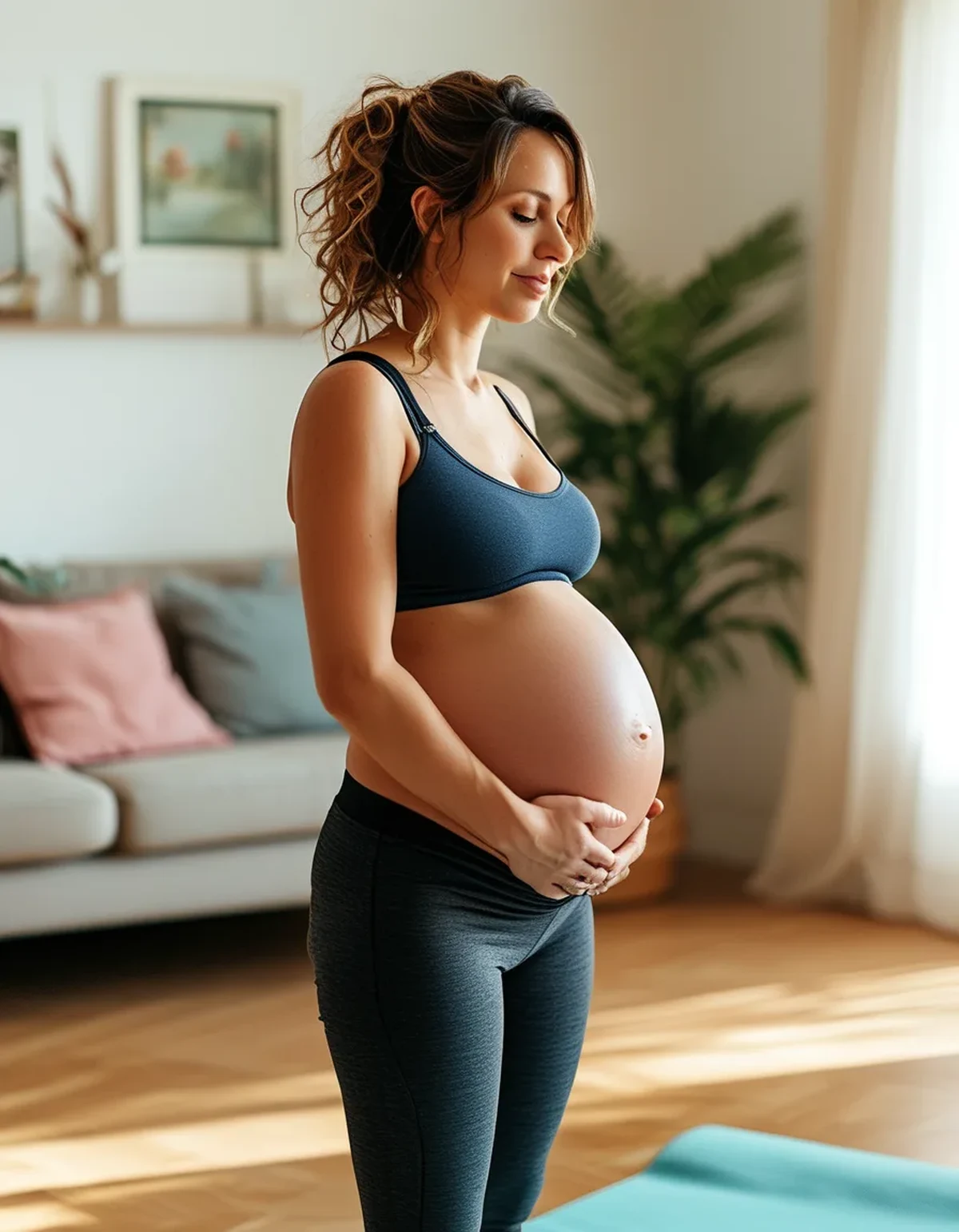
Seen here: Maternity Capris with Side Pockets — shop it on bubblelime.com
Keep Reading
This article is for general informational purposes only and is not medical advice. It is not a substitute for professional diagnosis or treatment. Always consult a qualified healthcare provider about your individual situation, especially before making significant changes to your diet or exercise routine.