Is It Normal to Feel Heavy Down There After a Workout?
Quick Answer: A heavy or dragging feeling in the vagina after exercise is common postpartum but it is not something to push through. It usually means the load exceeded what your pelvic floor could manage that day. Scale back impact and intra-abdominal pressure, exhale on effort, and if the heaviness persists into the next morning or worsens over weeks, see a pelvic floor physical therapist.
You finish the workout feeling fine. An hour later, standing at the kitchen counter, something feels off — a weight, a dragging, a sense that things are lower than they should be.
Almost nobody warned you about this one.
It is one of the most commonly reported postpartum symptoms and one of the least discussed, partly because the language for it is awkward and partly because the standard advice is just do more kegels, which is often wrong.

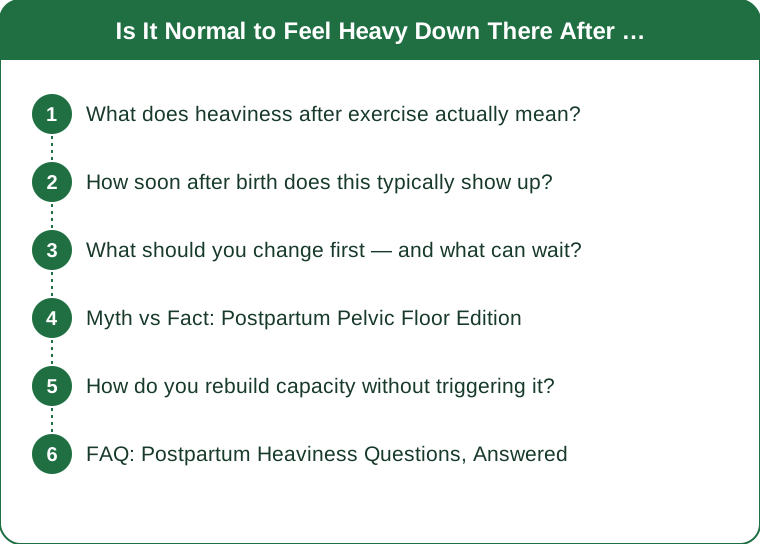
What does heaviness after exercise actually mean?
It means the demand you placed on your pelvic floor exceeded its current capacity for that session.
Your pelvic floor is a hammock of muscle that supports the bladder, uterus, and rectum against gravity and against the downward pressure your core generates during effort. When it fatigues, that support softens, and you perceive the shift as heaviness or dragging.
This is a fatigue signal, not a damage report. The same way your legs feel heavy after a long run, the pelvic floor tells you it worked past its threshold. The difference is that leg fatigue is socially normal to mention and this is not, so people stay silent and often escalate the very thing that caused it.
Three things drive it most often:
- Impact volume. Running, jumping, and plyometrics deliver repeated downward force.
- Intra-abdominal pressure spikes. Heavy lifting, breath-holding, and hard crunching push down from above.
- Time on your feet before you even started. A day of carrying a toddler is load, and it stacks.
How soon after birth does this typically show up?
Most often between six weeks and six months, and the timing is not random.
Six weeks is when many people are cleared to resume exercise, which is a clearance for wound healing, not a certification that the pelvic floor can handle running. Connective tissue remodeling continues for months after that appointment, and relaxin-influenced laxity does not vanish the day of your check-up.
It also shows up later than people expect — around four to six months — when energy returns and workouts get ambitious again while tissue capacity is still catching up.
If you are breastfeeding, lower estrogen levels can reduce tissue resilience, which is a real and temporary factor. It resolves, but it means the timeline that worked for a friend may not be yours.
Is heaviness the same thing as prolapse?
Not necessarily. Heaviness is a symptom. Prolapse is a physical finding of descent that a clinician grades on exam. Many people with occasional post-exercise heaviness have no clinically significant prolapse, and many with a mild grade have no symptoms at all. The two overlap but they are not the same word.
What should you change first — and what can wait?
Change breathing and load before you change anything else. These two adjustments resolve the majority of mild cases within two to three weeks.
Exhale on the effort. Breathe out as you lift, press, stand up, or push. Holding your breath through a hard rep is the single largest pressure spike you can create.
Cut impact volume by half for two weeks. Not to zero — to half. If you ran three miles, walk two and run one. Total impact minutes matter more than intensity here.
Watch the end of the workout, not the start. Symptoms almost always appear in the last third of a session, when the pelvic floor is fatigued. Ending ten minutes earlier is often more effective than any exercise you could add.
Reduce load on the days after a poor night. Sleep deprivation measurably reduces muscular endurance, and postpartum sleep is what it is.
What can wait: buying anything, adding a supplement, or overhauling your entire program. And stop doing hundreds of kegels — a pelvic floor that cannot relax fully is just as dysfunctional as one that cannot contract, and grinding out reps on an already-fatigued muscle is not the fix people assume it is.

Myth vs Fact: Postpartum Pelvic Floor Edition
Myth: If it feels heavy, you need more kegels. Fact: Sometimes the opposite. A hypertonic pelvic floor — one held chronically tight — also produces heaviness and pressure symptoms, and adding contractions makes it worse. An exam tells you which you have. Guessing does not.
Myth: Heaviness means you should stop exercising. Fact: Deconditioning makes this worse over time. The goal is finding the load your floor can handle and building from there, not withdrawal.
Myth: This is permanent once it starts. Fact: Symptoms fluctuate substantially with fatigue, hydration, constipation, hormonal phase, and time of day. Most people improve meaningfully with targeted work.
Myth: It only happens to people who had vaginal deliveries. Fact: Pregnancy itself loads the pelvic floor for nine months. Cesarean birth reduces some risk factors but does not exempt anyone.
Myth: Feeling heavy at the end of the day means something is wrong. Fact: Symptoms worsening as the day progresses is the normal pattern, not an alarm. Worsening week over week is the pattern that warrants a call.
How do you rebuild capacity without triggering it?
Work at the edge of comfortable, not past it. A simple progression that respects the tissue:
Weeks 1–2: Walking, breath work with a focus on the exhale, side-lying and supported strength work. Nothing that produces symptoms during or after.
Weeks 3–4: Add loaded carries and squats to a moderate weight where you can breathe normally throughout. Standing work reintroduces gravity gradually.
Weeks 5–8: Reintroduce impact in small doses. Start with 30 seconds of easy jogging, walk two minutes, repeat six times. If the next morning is clear, add 15 seconds per interval the following session.
The next-morning test is your best data point. Symptoms during a workout are noisy — heat, hydration, and how the day went all interfere. How you feel when you first stand up the next morning tells you whether you overshot.
Track it in one line on your phone: date, what you did, next-morning rating out of ten. Three weeks of that is more useful to a physical therapist than any description you could give from memory.
This is general information, not medical advice.
FAQ: Postpartum Heaviness Questions, Answered
When should I actually see a pelvic floor physical therapist?
If heaviness persists into the next morning, if it is worsening across weeks rather than improving, if you have any leaking, or if you feel or see a bulge. Also go if you simply want to run again and are unsure how — you do not need a problem to qualify for help, and one assessment saves months of guessing.
Does wearing compression help?
Supportive high-rise compression shorts or leggings can reduce symptoms during activity for some people, and they are a reasonable tool. They manage the sensation rather than building capacity, so use them alongside progressive loading rather than instead of it.
Can constipation make it worse?
Significantly. Straining generates some of the highest intra-abdominal pressures the body produces, often exceeding what you create in the gym. Fiber, fluid, and a footstool that raises your knees above your hips are unglamorous and genuinely effective.
TL;DR:
- Post-workout heaviness is a fatigue signal from your pelvic floor, not a verdict on your body.
- Fix breathing first — exhale on effort — then halve your impact volume for two weeks.
- Use the next-morning check as your real data point, and log it in one line.
- More kegels is not automatically the answer; a tight floor produces the same symptom.
- Persisting, worsening, leaking, or a visible bulge means it is time for a pelvic floor PT.
The frustrating part of this symptom is how easy it is to interpret as a personal failure rather than a load-management problem. It is a load-management problem. You are not doing something wrong by feeling it — you are getting information about where your capacity currently sits, which is exactly what you need to build it back.
See It in Motion
Seen here: Maternity Capris with Side Pockets — shop it on bubblelime.com
Keep Reading
This article is for general informational purposes only and is not medical advice. It is not a substitute for professional diagnosis or treatment. Always consult a qualified healthcare provider about your individual situation, especially before making significant changes to your diet or exercise routine.