Is It Safe to Lift Weights Overhead During Pregnancy? What to Actually Know
Quick Answer: Overhead lifting is generally safe to continue during pregnancy for someone who was already doing it pre-pregnancy, at appropriately reduced loads, through most of the first and second trimester — but balance changes, increasing belly size affecting form, and core pressure considerations typically call for modifications (seated position, lighter loads, or switching to single-arm variations) as the third trimester progresses, and this is a decision worth discussing with a doctor or a pregnancy-certified trainer given how individual pregnancy experiences are.
Overhead lifting doesn’t need to be automatically crossed off a prenatal workout list, but it does need more thoughtful modification over time than most other exercises.

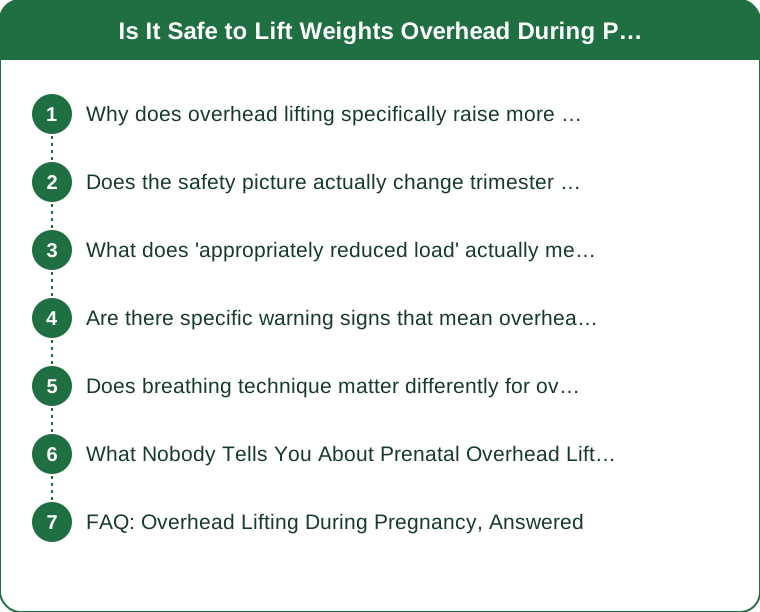
Why does overhead lifting specifically raise more questions than other strength exercises during pregnancy?
Overhead movements require significant core stabilization and balance, both of which are affected by pregnancy’s shifting center of gravity and loosening ligaments (from the hormone relaxin). As the belly grows, the base of support and the body’s natural stabilization strategy change in ways that can make a previously easy overhead movement feel notably less stable, which is exactly why it draws more caution than, say, a seated row.
The overhead position also naturally encourages an arched lower back if core control weakens, since the body tends to compensate for shoulder mobility limitations or fatigue by extending through the spine instead — a tendency that’s already elevated during pregnancy from the postural shifts alone, before an overhead load is even added into the equation. This combination of factors is exactly why overhead work gets more individualized attention from prenatal fitness professionals than most other strength exercises, rather than a blanket rule being applied the same way to everyone.
Does the safety picture actually change trimester by trimester?
Yes, meaningfully — in the first and often much of the second trimester, overhead lifting at appropriately reduced loads is generally well tolerated for someone with prior lifting experience and no complications. By the late second and third trimester, the growing belly changes posture and can increase lower back arch during standing overhead presses specifically, which is when many providers and trainers recommend switching to a seated position (which reduces the compensatory arch) or lighter, more controlled variations.
Some prenatal fitness programs further break the second half of pregnancy into finer stages, suggesting a shift toward single-arm overhead work (holding a rail or bench with the free hand for added stability) before moving fully to seated, since single-arm variations can bridge the gap between full standing overhead work and a fully seated modification as balance changes progress gradually rather than suddenly.
What does ‘appropriately reduced load’ actually mean in practice?
This varies significantly by individual, but the general guidance many prenatal fitness professionals give is to reduce weight enough that the last few reps of a set still feel controlled and comfortable, well short of failure, rather than continuing to push toward the same intensity levels used pre-pregnancy. Pregnancy is generally not the time to be chasing new personal records, even for someone who was lifting heavily beforehand.
A useful practical marker some prenatal trainers use is the ability to hold a normal conversation throughout the set — if breathing becomes labored enough that talking is difficult, that’s generally a sign the load or pace has crept past what’s appropriate for that stage of pregnancy, regardless of what the weight would have felt like before pregnancy.

Are there specific warning signs that mean overhead lifting should stop for that session or be modified further?
Yes — dizziness, unusual shortness of breath beyond normal exertion, pain (particularly in the pelvis, lower back, or abdomen), or any bleeding or leaking fluid are all signs to stop the exercise and check in with a healthcare provider rather than continuing or pushing through. General muscle fatigue is normal; these specific symptoms are not, and deserve prompt attention rather than being worked around.
Does breathing technique matter differently for overhead pressing during pregnancy compared to other lifts?
Yes — avoiding breath-holding (the Valsalva maneuver often used in heavy lifting) becomes more important during pregnancy, since that technique increases intra-abdominal pressure in a way that’s generally discouraged during pregnancy, particularly for core-and-balance-demanding movements like overhead pressing. A steady exhale on the pressing (upward) portion of the movement, rather than holding breath through the hardest part of the rep, is the commonly recommended alternative that keeps intra-abdominal pressure more controlled throughout the set.
This breathing adjustment tends to feel unfamiliar at first for anyone with a longer lifting background, since breath-holding for stability is often taught and reinforced in general strength training outside of pregnancy. Practicing the exhale-on-exertion pattern with lighter weight before it’s actually needed at a heavier load makes the adjustment feel more automatic once overhead pressing continues further into pregnancy.
What Nobody Tells You About Prenatal Overhead Lifting
A seated overhead press is often more useful during later pregnancy than most prenatal fitness content emphasizes — it removes the standing balance and compensatory lower-back-arch factors almost entirely while still allowing the shoulder and upper body strength work to continue safely. Many people default straight to stopping overhead work altogether once balance starts to feel off, when switching to seated is often a viable middle path that keeps the exercise going longer.
A sturdy bench with back support, rather than an exercise ball or unstable seat, is worth prioritizing for this modification specifically, since the goal is removing instability from the equation entirely rather than trading one balance challenge for a different, less obvious one.
FAQ: Overhead Lifting During Pregnancy, Answered
Is it safe to start overhead lifting for the first time during pregnancy if there was no prior lifting experience?
Starting a completely new strength exercise, especially one requiring balance and core stabilization like overhead pressing, is generally something to discuss with a doctor first — pregnancy is usually not the ideal time to introduce brand-new, technically demanding movements from scratch.
Does diastasis recti change the answer here?
Yes — if diastasis recti (abdominal separation) is present or a known risk factor, core-intensive overhead movements may need modification or a pause, and this is worth discussing specifically with a pelvic floor physical therapist or prenatal fitness specialist.
When should overhead lifting be avoided entirely during pregnancy?
Any pregnancy complication involving blood pressure, placenta position, or a doctor’s specific activity restriction should override general exercise guidance — always defer to individual medical guidance over general information. This is general information, not medical advice.
TL;DR:
- Overhead lifting at reduced loads is generally fine through much of early-to-mid pregnancy for experienced lifters
- Balance and core stabilization changes make late-pregnancy overhead work need more modification
- Seated overhead pressing removes standing balance and lower-back-arch concerns effectively
- Dizziness, pain, shortness of breath, or bleeding are signs to stop and check in with a provider
Overhead lifting during pregnancy is less about a fixed yes-or-no rule and more about adjusting the how as the trimesters progress — always in conversation with a doctor or a pregnancy-certified trainer. This is general information, not medical advice.
See It in Motion
Seen here: Maternity Capris with Side Pockets — shop it on bubblelime.com
Keep Reading
This article is for general informational purposes only and is not medical advice. It is not a substitute for professional diagnosis or treatment. Always consult a qualified healthcare provider about your individual situation, especially before making significant changes to your diet or exercise routine.