Modify by Symptom, Not by Trimester: a Smarter Way to Adjust Pregnancy Workouts
Quick Answer: Trimester-based rules are averages that fit nobody exactly — modify by symptom instead. Breathless earlier than usual? Cap intensity at talk-test pace. Pelvic pressure or heaviness? Swap impact for support. Dizziness on your back? Incline or side-lying. Any bleeding, fluid leak, regular contractions, or chest pain: stop and call your provider. Cleared exercisers benefit from staying active through pregnancy.
The trimester charts say week 14 means one thing and week 27 another — but two people at the same week can be living in completely different bodies. Your symptoms update daily and never read the chart. They’re the better coach, if you know their language. This assumes your provider has cleared you to exercise — that conversation comes first.

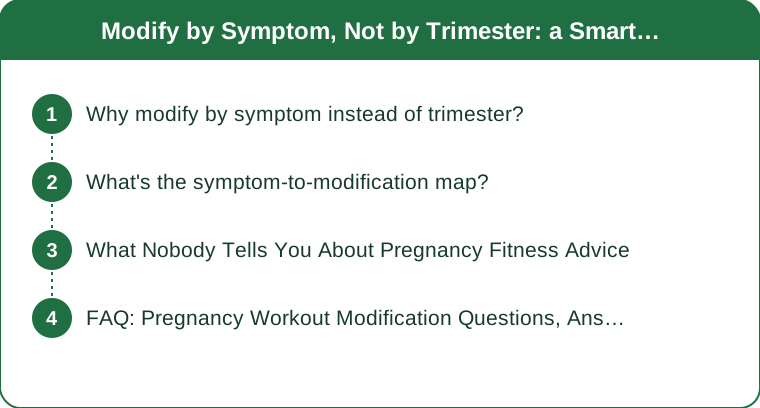
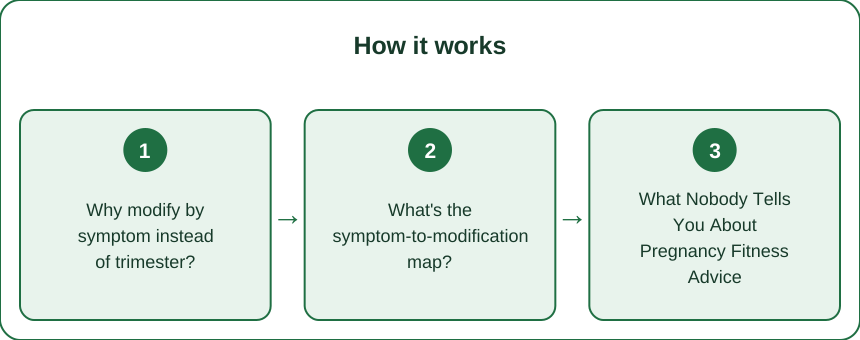
Why modify by symptom instead of trimester?
Trimester guidelines compress enormous variation into three averages. One person runs comfortably at week 30; another needs walking-only by week 18 — both normal, both invisible to a chart.
Symptoms are your real-time report: they reflect your blood volume, your joint laxity, your baby’s position, today. Symptom-led modification means you adjust exactly when your body asks — no sooner (losing fitness to caution the chart demanded) and no later (pushing through what the chart hadn’t scheduled yet).
The method: keep your cleared routine as the default, and let each symptom trigger its specific swap — the map below. One non-negotiable layer sits above all of it: the stop-now signals (bleeding, fluid leaking, regular painful contractions, chest pain, severe headache, calf pain/swelling) mean stop and contact your provider, full stop. This is general information, not medical advice.
What’s the symptom-to-modification map?
- Breathless sooner than expected → cap intensity at the talk test: you should manage full sentences. Pregnancy raises baseline cardiac workload; the test auto-adjusts as weeks pass.
- Pelvic pressure or heaviness → remove impact (jumping, running) in favor of cycling, swimming, incline walking; reduce single-leg loading; this symptom also earns a pelvic-floor-physio visit, one of pregnancy’s best-value appointments.
- Dizzy lying flat (usually 2nd half) → incline the bench 15-30 degrees, or swap to side-lying and seated versions. That’s the supine-position adjustment everyone’s heard of, applied when your body votes.
- Round ligament zings on twists/quick moves → slow the tempo, shrink the range, warm up longer. Sharp-but-brief and movement-linked is the pattern; persistent pain is a provider call.
- Doming or coning along your midline in planks → regress core work to bear holds, side planks, and breathing-led core; the bulge means pressure needs better managing, not more toughness.
- Joints feeling loose (hello, relaxin) → trade end-range stretching and max lifts for mid-range strength at moderate loads — stability is the theme, not new flexibility records.

What Nobody Tells You About Pregnancy Fitness Advice
The loudest myth is still ‘don’t lift anything’ — while current consensus guidance actively recommends strength training for cleared pregnant exercisers: roughly 150 minutes of moderate activity weekly, strength included, with benefits for back pain, gestational diabetes risk, mood, and labor preparation.
The heart-rate ceiling myth (‘never above 140!’) was retired decades ago in favor of the talk test — yet it survives in comment sections like a cockroach after the apocalypse.
And the subtlest unhelpful advice: ‘just listen to your body’ without teaching the vocabulary. Listening only works if you know what pelvic pressure is asking for versus what breathlessness is asking for — which is exactly why a symptom-to-swap map beats both the rigid charts and the vague reassurance. Your body is talking; this article is just the phrasebook.
FAQ: Pregnancy Workout Modification Questions, Answered
Can I keep lifting weights while pregnant?
With provider clearance, generally yes — shifting toward moderate loads, controlled tempo, and stability as weeks progress. The symptom map handles the adjustments; breath-holding max efforts retire until postpartum.
Are abdominal exercises off-limits?
Not categorically — core training changes rather than stops. Watch for doming as your regression signal and favor breath-led, side, and standing core work in later months. A pelvic floor physio can personalize this in one visit.
What if I had zero routine before pregnancy — too late to start?
With clearance, starting gentle is encouraged, not risky: walking, swimming, light bands, prenatal classes. Begin at ‘comfortable,’ progress by feel, and use the same symptom map from day one.
TL;DR:
- Trimester charts are averages; symptoms are your real-time data — modify when your body asks
- Key swaps: breathless → talk-test pace; pelvic pressure → drop impact; dizzy on back → incline/side-lying; doming → regress core
- Stop-now signals (bleeding, fluid, regular contractions, chest pain) = call your provider immediately
- Cleared exercisers should keep moving: ~150 weekly minutes including strength is the modern recommendation
The chart knows the average pregnancy; your symptoms know yours — coach with the better data. This is general information, not medical advice.
See It in Motion
Seen here: Maternity Capris with Side Pockets — shop it on bubblelime.com
Keep Reading
This article is for general informational purposes only and is not medical advice. It is not a substitute for professional diagnosis or treatment. Always consult a qualified healthcare provider about your individual situation, especially before making significant changes to your diet or exercise routine.