Prenatal Strength Training: How to Lift Safely Through Pregnancy
Quick Answer: Strength training is safe for most uncomplicated pregnancies with provider clearance, and it genuinely helps with back pain, energy, birth preparation and postpartum recovery. The rules: continue and modify rather than start heavy, keep loads moderate and controlled (roughly an effort where you could still speak in short sentences), breathe out on exertion instead of holding your breath, limit long periods flat on your back from around the second trimester, and widen your stance as your center of gravity shifts. Stop and call your provider for bleeding, dizziness, contractions, fluid leakage or chest pain. (General information, not medical advice.)
The advice most pregnant women get about lifting is a shrug and “maybe just walk instead.”
That’s a genuine shame, because prenatal strength training is one of the most useful things you can do for the next nine months and the year after — and the actual guidance is far more permissive, and far more specific, than the shrug suggests.
Why is strength training helpful during pregnancy?
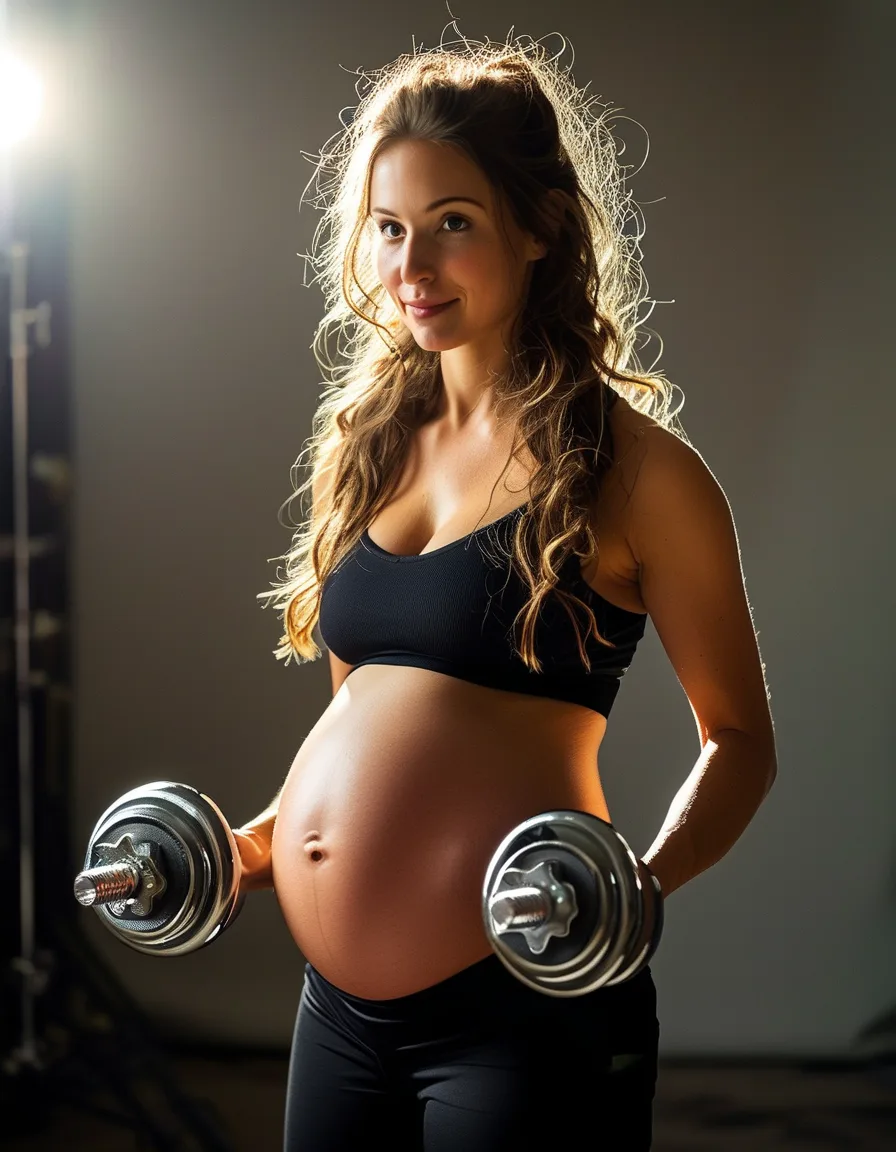
It supports the changes your body is making. A growing bump pulls your posture forward and loads your low back, hips and pelvis. Strong glutes, back and deep core muscles are what manage that load — and back pain is one of the most common pregnancy complaints there is.
It prepares you for birth and for after. Labor is a physical event, and the postpartum period involves lifting a growing baby, a car seat, and a stroller, repeatedly, often one-handed, on poor sleep. That’s a strength demand, and it arrives whether or not you’ve trained for it.
It supports energy and mood. Regular movement helps with the fatigue and the emotional swings, and it’s one of the few things in pregnancy that reliably makes you feel more like yourself.
It contributes to a healthy pregnancy. Appropriate exercise during pregnancy is broadly recommended for uncomplicated pregnancies, with your provider’s clearance.
And it protects your baseline. Strength you maintain now is strength you don’t have to rebuild from zero postpartum — which is the benefit most women report appreciating most in hindsight.
How do you lift safely through each trimester?
Get cleared first. Talk to your OB or midwife before you continue or start — especially with a history of preterm labor, placenta previa, high blood pressure, cervical insufficiency, or a multiple pregnancy. This isn’t a formality; it’s what makes everything below applicable to you specifically.
Continue and modify — don’t start heavy. The general principle is that pregnancy is a poor time to chase new maxes, and a fine time to keep doing what your body already knows. If you’re new to lifting, start light with bodyweight and machines and build gradually rather than diving into a barbell program.
First trimester. Mostly carry on as you were. Fatigue and nausea are the real limiters, and honoring them is not backsliding. Some days a 20-minute session is the win.
Second trimester. Two changes matter. Avoid long stretches lying flat on your back — swap flat bench work for an incline. And start modifying moves the bump interferes with: sumo or goblet squats instead of deep narrow ones, elevated or incline push-ups, single-arm rows in a split stance instead of bent-over rows.
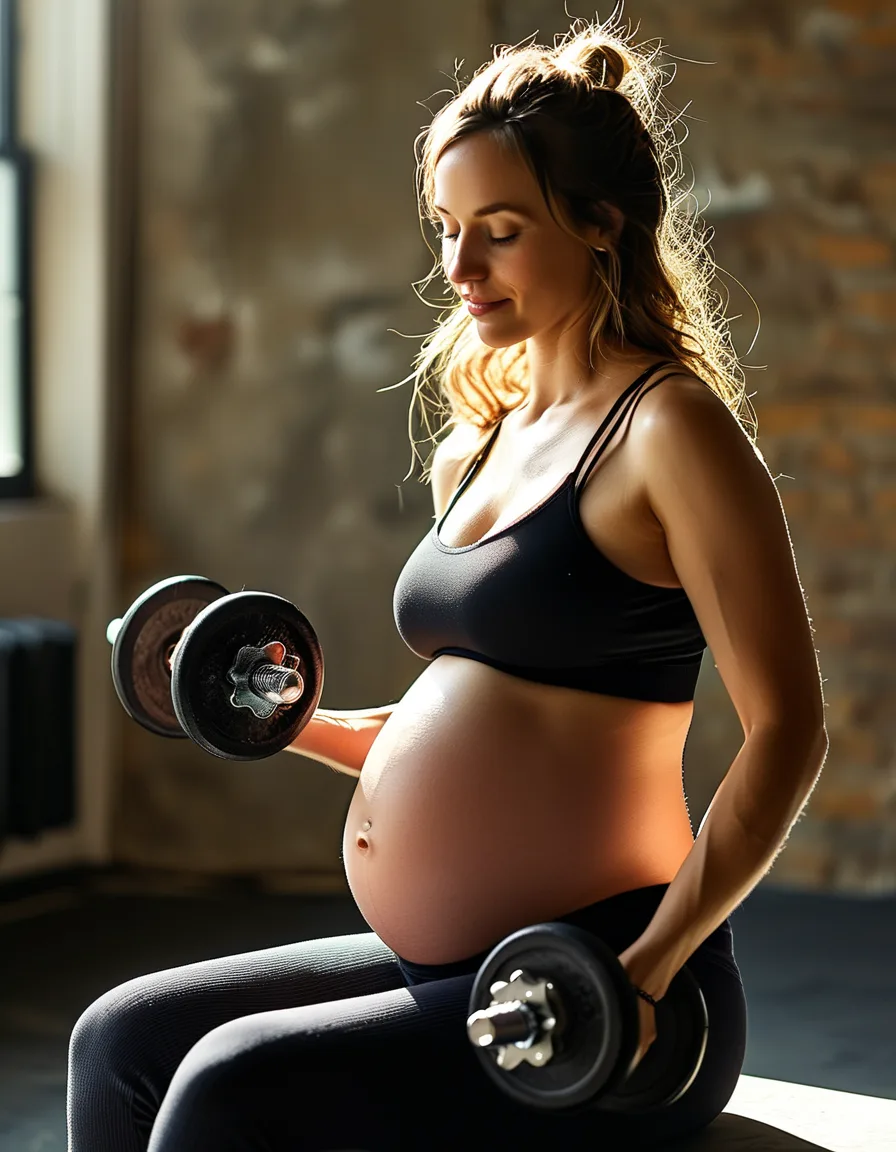
Third trimester. Reduce load, widen your stance for balance, and favor supported positions — seated, incline, or holding onto something. Your center of gravity has moved and relaxin has made your joints more mobile, so stability matters more than intensity now. Trade barbells for dumbbells and machines if balance feels iffy.
Form and breathing throughout. Brace gently, and exhale on the effort — never hold your breath and strain (the Valsalva maneuver spikes intra-abdominal pressure, which is exactly what you’re avoiding). A useful cue: exhale as you stand up out of the squat, inhale on the way down.
Stay pelvic floor aware. Coordinate a gentle pelvic floor engagement with your exhale on the effort. If you notice leaking, heaviness or pressure, that’s a signal to reduce load and — genuinely worth doing — see a pelvic health physio.
Moderate and controlled beats heavy. A practical guide: work at an effort where you could still hold a short conversation, keep 2–3 reps in reserve on every set, and prioritize control over load. Two to three sessions a week is plenty.
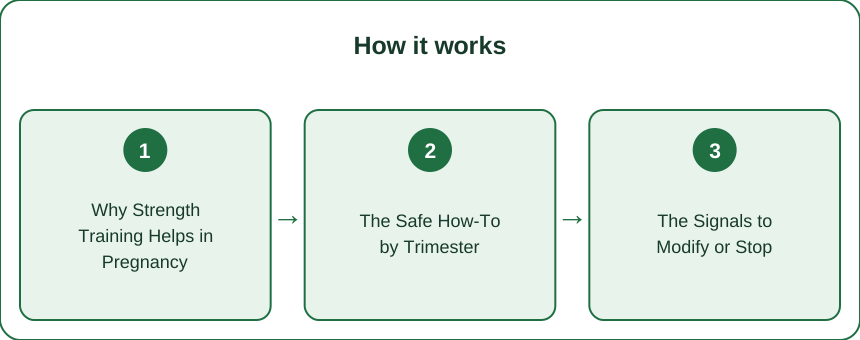
What are the signs to modify or stop?
Stop immediately and contact your provider if you experience:
- Vaginal bleeding
- Regular painful contractions
- Fluid leaking from the vagina
- Chest pain, shortness of breath before exertion
- Dizziness or feeling faint
- Headache, calf pain or swelling
- Muscle weakness affecting balance
Modify (don’t necessarily stop) if you notice:
- Coning or doming down the midline of your belly during an exercise — this means the load exceeds what your core can currently manage. Reduce the load, change the angle, or drop the exercise.
- Pelvic pressure or heaviness, or any leaking. Lower the intensity and get a pelvic floor assessment.
- Overheating. Keep sessions cool, wear breathable layers, and hydrate well — this matters more in summer heat than people expect.
- Balance changes or unusual fatigue. Don’t push through either; both are your body reporting accurate information.
Above all: your provider’s specific advice outranks any general guidance, including this article. Pregnancies differ, and yours is the one that counts.
Myth vs Fact
Myth: Lifting weights while pregnant risks harming the baby. Fact: For uncomplicated pregnancies with clearance, appropriate strength training is considered safe and beneficial. The modifications above exist to manage pressure, balance and heat — not because lifting itself is dangerous.
Myth: You can’t lift more than 25 pounds when pregnant. Fact: There’s no universal weight limit. What matters is your training history, your form, your breathing, and how your body responds. A woman who deadlifted 150 lbs before pregnancy has a very different appropriate load than someone brand new to lifting.
Myth: You have to stop all core work. Fact: You modify it. Deep core and pelvic floor work stays valuable throughout; what you drop are crunches, full sit-ups and anything that causes coning.
Myth: If you weren’t lifting before, it’s too late to start. Fact: You can begin during pregnancy with clearance — just start light, prioritize technique, and build slowly. Machines and bodyweight are excellent entry points.
Mini FAQ
Can I keep squatting and deadlifting while pregnant?
Usually yes, with modifications. Squats stay valuable throughout — widen your stance and go to a comfortable depth. Deadlifts often work well too, though many women switch to trap-bar, elevated, or sumo variations as the bump grows so the bar has somewhere to go. Reduce load as you progress and stop any lift that causes coning or pelvic pressure.
How heavy should I lift during pregnancy?
Moderate: an effort where you keep 2–3 reps in reserve, maintain clean form, and can breathe throughout without straining. Most women naturally reduce load across the trimesters, and that’s expected rather than a setback. Avoid maximal attempts and long breath-held efforts.
When should I see a professional?
See your provider for any red-flag symptom listed above, and before starting or changing your program. A pelvic health physiotherapist is worth seeing proactively — ideally around the second trimester — for leaking, pressure, doming, or pubic/pelvic girdle pain. They’ll tailor the core and pelvic floor work to you, which is more valuable than any generic prenatal program.
TL;DR:
- Get provider clearance first; their advice overrides everything here.
- Continue and modify rather than starting heavy mid-pregnancy.
- 2nd trimester: limit long flat-on-back work; adjust bump-affected moves.
- 3rd trimester: lighter load, wider stance, supported positions.
- Exhale on exertion — never hold your breath and strain.
- Modify for coning, pelvic pressure or leaking; see a pelvic health physio.
- Stop and call your provider for bleeding, contractions, fluid, dizziness or chest pain.
Cleared, modified and controlled — that’s safe strength through pregnancy.
See It in Motion
Seen here: Maternity Capris with Side Pockets — shop it on bubblelime.com
Keep Reading
This article is for general informational purposes only and is not medical advice. It is not a substitute for professional diagnosis or treatment. Always consult a qualified healthcare provider about your individual situation, especially before making significant changes to your diet or exercise routine.