Walking During Pregnancy, Every Question Answered
Quick Answer: Walking is safe throughout an uncomplicated pregnancy and is the most commonly recommended activity, with general guidance pointing toward around 150 minutes of moderate activity per week. Pace and duration typically need to change by trimester - not because walking becomes unsafe, but because a shifting centre of gravity, increased blood volume, and pelvic ligament changes alter how it feels. Shorter, more frequent walks usually work better than long ones by the third trimester.
Everyone tells you walking is good for you. Nobody tells you how far, how fast, or what to do when your hips start complaining at the twenty minute mark.

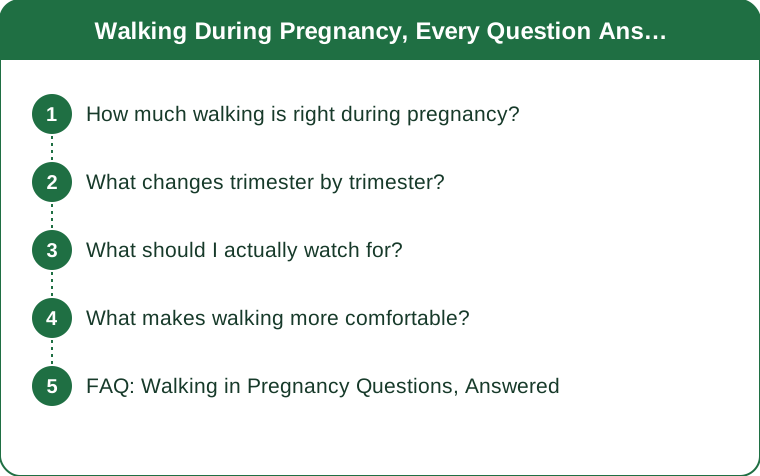
How much walking is right during pregnancy?
General activity guidance provides the framework, and individual circumstances adjust it.
Around 150 minutes of moderate activity per week is the widely cited target. That is the general adult recommendation and it applies in uncomplicated pregnancy too, spread across most days rather than concentrated.
Moderate means you can talk but not sing. The talk test is the most practical intensity guide in pregnancy, since heart rate targets are less reliable when resting heart rate has risen by 10 to 20 beats.
If you walked regularly before, continue. Pregnancy is generally not the time to start a demanding new activity, and it is also not a reason to stop something your body is accustomed to.
If you are starting from very little, build gradually. Ten minutes a day, increasing by a few minutes each week, is a reasonable approach and considerably better than nothing.
Total matters more than session length. Three 10 minute walks provide the same activity as one 30 minute walk, and they are frequently more manageable, particularly later on.
And your own baseline is the reference point. Someone who walked 15,000 steps a day before pregnancy and someone who walked 3,000 are in genuinely different situations, and generic step targets serve neither well.
This is general information, not medical advice. Follow the guidance of your midwife or doctor, particularly with any pregnancy complication.
What changes trimester by trimester?
The activity stays the same; almost everything around it changes.
First trimester
Fatigue and nausea are the main obstacles rather than any physical limitation. Blood volume is already increasing and progesterone is rising, both of which can make familiar walks feel harder than expected. Many people find shorter walks more manageable, and fresh air genuinely helps nausea for some. Overheating is worth avoiding, particularly in the first weeks.
Second trimester
Usually the easiest period. Energy typically returns, nausea often settles, and the bump is not yet large enough to affect balance much. This is the window where most people walk most comfortably and can maintain or gently build duration.
Third trimester
Centre of gravity shifts forward, which changes gait and increases the load on the lower back and pelvis. Relaxin has increased ligament laxity, making the pelvis less stable. Pelvic girdle pain becomes common. Shorter, more frequent walks work better than long ones, and pace naturally slows.
Balance deserves specific attention in the third trimester. Uneven ground, kerbs, and poor lighting all become more consequential when your centre of gravity has moved and you cannot see your feet.
And swelling changes your shoe size. Feet frequently increase by up to a full size, and shoes that fitted in month three may be genuinely uncomfortable by month eight.

What should I actually watch for?
A short list of reasons to stop, and a longer one of reasons to adjust.
Stop walking and seek medical advice for these
Vaginal bleeding, regular painful contractions, amniotic fluid leakage, chest pain, calf pain or swelling in one leg, severe headache, dizziness or feeling faint, or shortness of breath before exertion. These are standard warning signs to stop exercising in pregnancy.
Adjust rather than stop for these
Pelvic girdle pain, lower back ache, breathlessness that resolves with rest, or feeling heavy in the pelvis. These generally call for shorter walks, a slower pace, or a support garment rather than stopping.
Pelvic girdle pain deserves specific mention
Pain at the front of the pelvis or in the lower back with walking is common and treatable. Shorter walks, avoiding wide strides, keeping the legs closer together when turning, and a referral to a pelvic health physiotherapist all help. Pushing through it tends to make it worse.
Heat is worth taking seriously
Core temperature regulation matters in pregnancy, particularly early on. Walk in the cooler parts of the day, choose shaded routes, carry water, and take the pace down rather than the distance in hot weather.
And listen to the feeling of heaviness. A sensation of pressure or heaviness in the pelvis during or after walking is worth mentioning to your midwife, since it can relate to pelvic floor load and is straightforward to address early.
What makes walking more comfortable?
Practical adjustments that make a substantial difference.
Shoes with real support, half a size up
Feet swell and arches flatten as ligaments loosen. Supportive trainers in a slightly larger size are the single most effective purchase, and they matter more in the third trimester than at any other point.
A support belt for pelvic pain
A maternity support band under the bump can reduce pelvic girdle pain noticeably for many people. It is worth trying before deciding walking is not manageable.
Shorter, more frequent walks
Three 10 minute walks are considerably more comfortable than one 30 minute walk by late pregnancy, and they achieve the same thing.
Flat, even, familiar routes
Stable ground reduces both the balance demand and the pelvic load. Familiar routes also mean you know where the toilets are, which is not a trivial consideration.
Walk with someone, or with your phone charged
A sensible precaution rather than an anxious one, particularly for longer walks later in pregnancy.
Adjust for the season
Late summer means earlier walks, shaded routes, water, and slower pace. Heat tolerance is genuinely reduced in pregnancy and the adjustment is worth making deliberately.
And keep it enjoyable rather than a target to hit. The evidence for activity in pregnancy is strong across mood, sleep, blood pressure, gestational diabetes risk, and recovery. Consistency matters far more than any particular distance.
FAQ: Walking in Pregnancy Questions, Answered
How much should I walk during pregnancy?
Around 150 minutes of moderate activity per week is the general guidance for uncomplicated pregnancy, spread across most days. Shorter, more frequent walks count exactly the same as one long one.
How fast should I walk while pregnant?
At a pace where you can hold a conversation but not sing. Heart rate targets are less reliable in pregnancy because resting heart rate rises by 10 to 20 beats, so the talk test is more practical.
Is it safe to walk in the third trimester?
Yes, in an uncomplicated pregnancy, with adjustments. A shifted centre of gravity and looser ligaments mean shorter walks, flatter routes, and a slower pace usually work better than maintaining your earlier distance.
What if walking causes pelvic pain?
Pelvic girdle pain is common and treatable. Shorter walks, narrower strides, a support belt, and a referral to a pelvic health physiotherapist all help. It is worth addressing early rather than pushing through.
When should I stop walking and call someone?
Vaginal bleeding, regular painful contractions, fluid leakage, chest pain, calf pain or swelling in one leg, severe headache, dizziness, or breathlessness before exertion. Those are the standard warning signs to stop and seek advice.
Do I need different shoes when pregnant?
Frequently yes. Feet swell and arches flatten, often by up to a full size. Supportive trainers half a size larger make more difference to comfort than almost anything else.
TL;DR:
- Around 150 minutes of moderate activity a week, at a pace where you can talk but not sing.
- Three 10 minute walks count the same as one 30 minute walk, and work better in the third trimester.
- Adjust for shifting balance and looser ligaments with flat routes, shorter strides, and supportive shoes half a size up.
- Pelvic girdle pain is common and treatable - see a pelvic health physiotherapist rather than pushing through.
- Bleeding, contractions, fluid leakage, chest pain, or one-sided calf pain means stop and seek advice.
Walking is the most recommended activity in pregnancy for good reasons. It just needs to change shape as the pregnancy does.
See It in Motion
Seen here: Maternity Capris with Side Pockets — shop it on bubblelime.com
Keep Reading
This article is for general informational purposes only and is not medical advice. It is not a substitute for professional diagnosis or treatment. Always consult a qualified healthcare provider about your individual situation, especially before making significant changes to your diet or exercise routine.