When Can You Actually Start Running Again After Birth?
Quick Answer: Current physiotherapy guidance generally suggests around 12 weeks postpartum at the earliest for a return to running, and only after a graded walking and strength progression plus specific functional checks — not at the six-week appointment, which clears you for activity generally, not for impact. The checks matter more than the date: pain-free walking 30 minutes, single-leg balance, single-leg calf raises, hopping without leaking or heaviness. Get a pelvic health physio assessment if you can.
Six weeks is a medical check-up, not a green light for impact. Those got conflated somewhere and it causes a lot of avoidable problems.

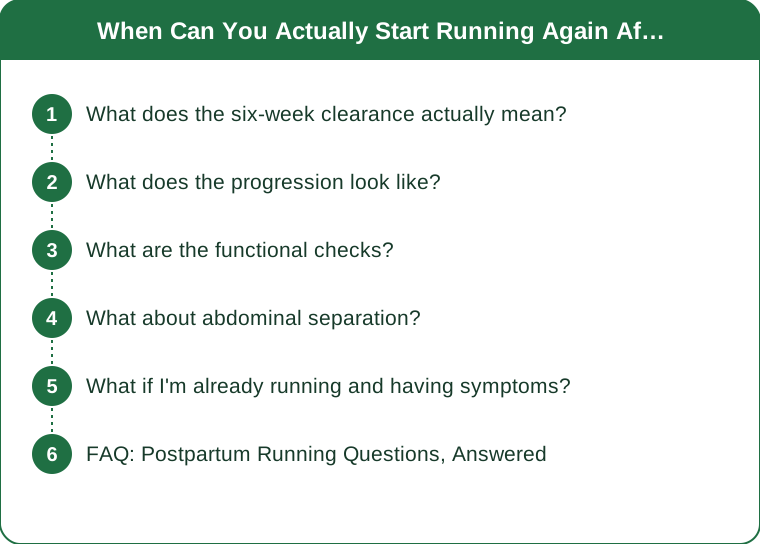
What does the six-week clearance actually mean?
That your immediate recovery is progressing normally. It isn’t an assessment of readiness for impact.
The postnatal check covers healing, bleeding, blood pressure, mood, contraception, and general recovery. It typically does not include an assessment of pelvic floor function or load tolerance, which are what determine readiness for running.
Tissue healing continues well past six weeks. Connective tissue remodeling takes months, and relaxin — the hormone that increased ligament laxity — remains elevated for a period after birth, particularly while breastfeeding.
Running produces ground reaction forces of roughly two to three times bodyweight, repeated thousands of times. That’s a substantial load on a pelvic floor and abdominal wall that are still recovering.
Returning to running too early is associated with pelvic floor symptoms — leaking, heaviness, and prolapse symptoms — which are much easier to prevent than to treat.
This applies to vaginal and cesarean birth both. A cesarean involves abdominal wall surgery and also nine months of pelvic floor loading during pregnancy — the delivery route doesn’t remove the pregnancy itself.
What does the progression look like?
Graded, over about three months, with walking and strength before any impact.
Weeks 0 to 6: walking, breathing, gentle pelvic floor activation. Short walks building gradually. This is genuinely the training — it’s not a waiting period.
Weeks 6 to 12: build walking to 30 minutes comfortably, add progressive strength work. Bodyweight squats, bridges, step-ups, single-leg work. Strength is the foundation impact loads sit on, and skipping it is the most common error.
Around week 12, run the functional checks (next section). If they pass, begin a walk-run progression — something like 1 minute running, 2 walking, for 20 minutes total. Not a continuous run.
Build slowly from there. Increase running intervals before increasing total duration, and add no more than roughly 10% per week.
Any symptom means back off. Leaking, heaviness or dragging in the pelvis, or pain means the current load is too much — reduce and rebuild rather than pushing through.
Individual variation is large. Some people are ready sooner, many need longer, and a difficult birth or complications changes the timeline substantially.
What are the functional checks?
A set of load tolerance tests that predict readiness better than any date.
Walk 30 minutes without symptoms. Pain-free, no leaking, no pelvic heaviness afterward. If walking produces symptoms, running certainly will.
Single-leg balance, 10 seconds each side. Basic, and it exposes control deficits.
Single-leg calf raises, 20 reps each side. This tests the calf’s capacity for the repeated loading running requires.
Single-leg bridge, 20 reps each side. Single-leg sit-to-stand, 20 reps each side.
Then the impact checks: run in place 1 minute, 10 hops on each leg, 10 single-leg squats. All without leaking, heaviness, or pain.
If any check fails, that’s your training target — not a reason to give up on running. Most people who fail can pass within a few weeks of specific work.
These checks are drawn from postpartum return-to-running guidance developed by pelvic health physiotherapists. They’re a screening tool, not a substitute for individual assessment.
This is general information, not medical advice.

What about abdominal separation?
Common, often improves substantially on its own, and it needs assessment rather than assumption.
Diastasis recti — separation of the abdominal muscles along the midline — occurs in the large majority of pregnancies by the third trimester. Most improve considerably in the first months postpartum.
What matters more than the gap width is the tension you can generate across the midline. A wider gap with good tension often functions better than a narrower gap with none.
Check it or have it checked — lying on your back, knees bent, lift your head slightly and feel along the midline above and below the navel for width and depth.
What helps: breathing coordination, deep abdominal work, and progressive loading. What doesn’t help: aggressive crunches and sit-ups early on, which can increase the doming.
Doming or coning during a movement is the practical signal. If your abdomen forms a visible ridge during an exercise, that load is currently too much for your midline — regress it.
This is exactly what a pelvic health physiotherapist assesses. If you have access to one, a single appointment is genuinely worth it — it replaces a lot of guesswork with an actual answer about your specific situation.
What if I’m already running and having symptoms?
Back off and get assessed. Symptoms are information, not something to push through.
Leaking during running is common and it is not something you have to accept. It’s a signal that pelvic floor demand exceeds current capacity, and it responds well to appropriate treatment.
Heaviness, dragging, or a bulging sensation in the pelvis warrants prompt assessment. These can indicate pelvic organ prolapse, which is very treatable and much better addressed early.
Reduce the load rather than stopping entirely. Shorter runs, more walk intervals, flatter routes, softer surfaces. Deconditioning helps nothing.
Build the strength foundation you may have skipped. Most symptomatic return-to-running cases involve someone who went from six-week clearance to running without the intervening strength work.
See a pelvic health physiotherapist. This is a specialty with strong outcomes for exactly these problems, and internal assessment tells you things no self-test can.
And a note on timelines: there’s a lot of pressure to “get back” quickly. The recovery timeline is months, it’s individual, and taking longer isn’t falling behind. This is general information, not medical advice.
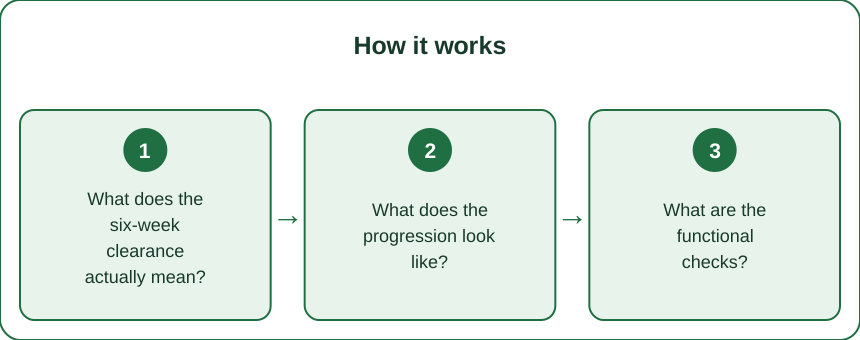
FAQ: Postpartum Running Questions, Answered
Does breastfeeding affect the timeline?
Hormonal changes during breastfeeding maintain somewhat greater tissue laxity, and some people find joints feel less stable. It doesn’t preclude running, but it’s a reason to progress gradually and pay attention to how joints respond. Adequate nutrition and hydration matter more when breastfeeding and training together.
Is it different after a cesarean?
The abdominal wall has a surgical incision that needs time to regain strength, so core progression is often slower. But pregnancy loaded the pelvic floor for nine months regardless of delivery route, so the pelvic floor checks apply equally. Many people wrongly assume a cesarean means the pelvic floor is unaffected.
What if it’s been years and I never did this?
The progression still applies and still works. Pelvic floor and core function respond to training at any point postpartum — including many years later. It’s never too late to address symptoms.
Can I do other exercise before 12 weeks?
Yes, and you should. Walking, stationary cycling, swimming once bleeding has stopped and any wound has healed, and progressive strength work are all appropriate earlier. The 12-week guidance is specific to running and impact, not to exercise generally.
TL;DR: Six weeks clears you for activity. It does not clear you for impact.
- Around 12 weeks is the earliest in current physio guidance — and only after a graded progression.
- Weeks 0-6: walking, breathing, gentle pelvic floor work. 6-12: 30-minute walks plus real strength training.
- Pass the checks first: 30-min walk symptom-free, single-leg calf raises x20, single-leg bridge x20, 10 hops per leg — no leaking, no heaviness, no pain.
- Start with walk-run intervals, not a continuous run. Increase intervals before duration.
- A cesarean doesn’t skip the pelvic floor — nine months of pregnancy loaded it regardless of delivery.
- Leaking or heaviness is not something to accept. It’s treatable, and earlier is easier.
If you can see a pelvic health physiotherapist, one appointment replaces a lot of guessing with an actual answer.
See It in Motion
Seen here: Maternity Capris with Side Pockets — shop it on bubblelime.com
Keep Reading
This article is for general informational purposes only and is not medical advice. It is not a substitute for professional diagnosis or treatment. Always consult a qualified healthcare provider about your individual situation, especially before making significant changes to your diet or exercise routine.