Why the Same Pregnancy Workout Feels Fine One Week and Completely Impossible the Next
Quick Answer: Pregnancy exercise tolerance shifts because blood volume, hormone levels, joint laxity, and center of gravity are all changing simultaneously and non-linearly week to week — the same workout that felt manageable at 16 weeks can feel genuinely harder at 20 weeks even with no change in fitness, because your body’s underlying conditions have shifted, not your effort or capability.
The exact same modified workout felt totally fine two weeks ago. This week, it feels like pushing through mud. Nothing about your effort changed — your body’s underlying conditions did, and pregnancy changes several of them at once, on their own separate timelines.

Why does blood volume change make exercise feel harder as pregnancy progresses?
Blood volume increases by 30-50% over pregnancy to support the growing baby, and while this is a normal, healthy adaptation, it also means your heart is working harder at rest and during activity than it was earlier — so a workout intensity that felt moderate in the first trimester can feel notably more demanding by the second or third, purely from this cardiovascular shift.
Does relaxin (the ligament-loosening hormone) actually affect workout difficulty?
Yes, indirectly — relaxin loosens joints and ligaments throughout pregnancy to prepare the pelvis for birth, but that same loosening reduces joint stability everywhere, meaning movements that felt stable and strong earlier can feel wobblier or require more stabilizing effort later, even without any strength loss.
Why do the same exercises feel different once the center of gravity shifts?
As the belly grows, your center of gravity moves forward and up, which changes how your core and stabilizing muscles need to engage for balance during almost any standing exercise. This is a mechanical change, not a fitness change — your body is compensating for a genuinely different balance point than it had weeks earlier.
What Nobody Tells You About Pregnancy Exercise Fatigue
Most pregnancy exercise guidance focuses on which exercises are safe, but rarely explains that feeling suddenly harder is expected and not a sign anything is wrong. First-trimester fatigue often isn’t fixed by more sleep because it’s hormonally driven, not sleep-debt driven. Third-trimester heaviness isn’t a fitness regression — it’s mechanical, from carrying meaningfully more weight in a shifted position. Both are normal parts of a body doing something enormous, not signs of losing fitness.
Is it safe to simply do less on the harder weeks?
Yes, and it’s the recommended approach — pregnancy exercise guidelines from bodies like ACOG emphasize listening to your body’s changing signals over hitting a fixed target every session. Scaling back intensity or duration on a harder week is appropriate, not a failure, and typically the harder feeling passes within days to a week as your body adjusts to the new baseline.
FAQ: Pregnancy Exercise Difficulty Changes, Answered
Should you worry if a workout suddenly feels much harder?
Generally no, especially if it coincides with a trimester transition — but any new sharp pain, dizziness, or shortness of breath beyond normal exertion warrants checking with your provider rather than pushing through.
Does this mean fitness gained earlier in pregnancy is being lost?
No — the underlying strength and cardiovascular base built earlier doesn’t disappear; it’s just being asked to work against a genuinely different set of physical conditions.
How much should intensity be scaled back during a harder week?
Enough that you can maintain a conversational pace and stop well before exhaustion — pregnancy exercise isn’t the time to chase progressive overload the way general fitness training does.
TL;DR:
- Blood volume increases 30-50% over pregnancy, making the same intensity feel cardiovascularly harder over time
- Relaxin loosens joints throughout pregnancy, reducing stability even without any strength loss
- A shifting center of gravity changes balance demands on almost every standing exercise
- Scaling back on harder weeks is appropriate guidance, not a sign of losing fitness
This is general information, not medical advice — always follow your own provider’s specific guidance, especially with any new or unusual symptoms during exercise.
See It in Motion
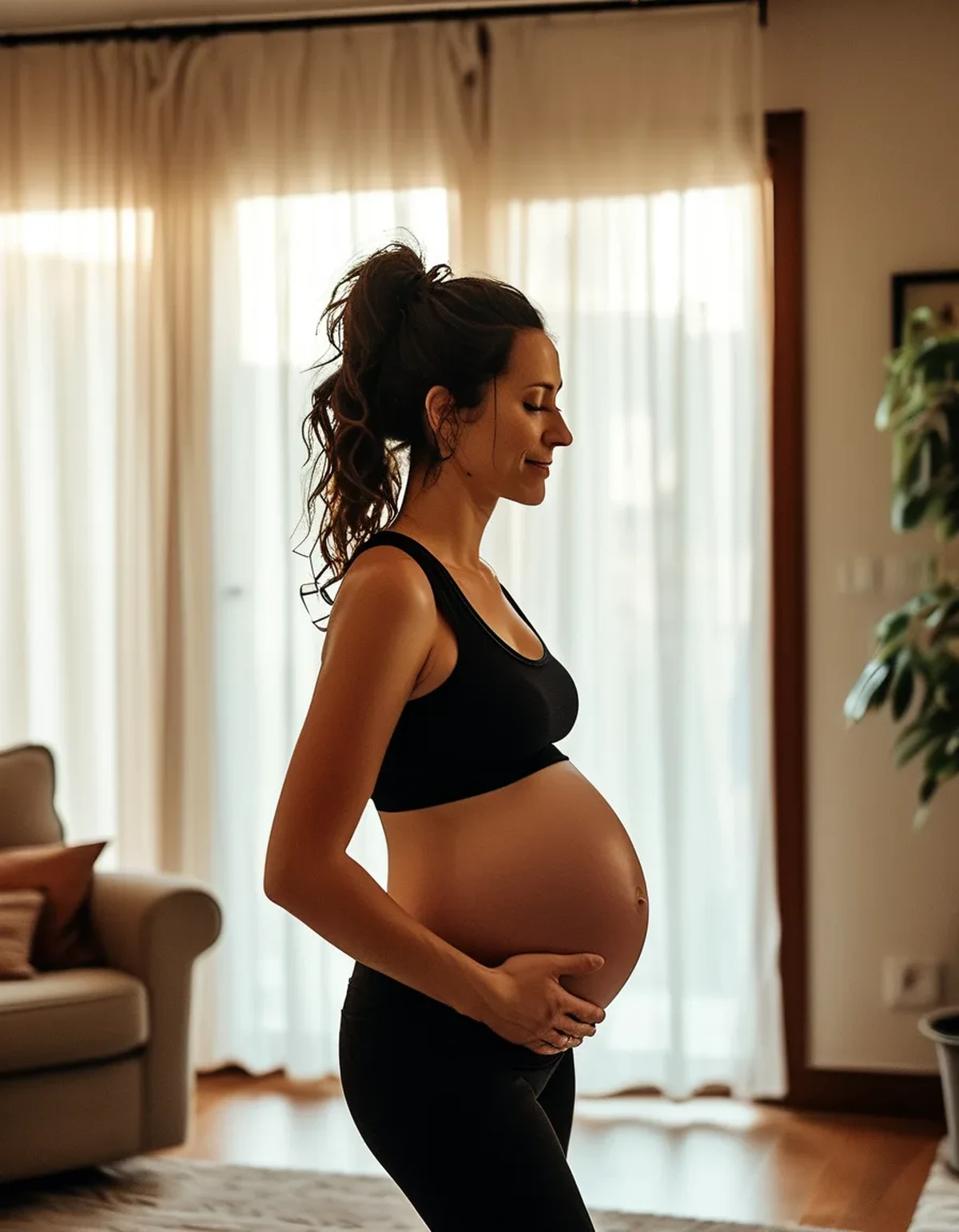
Seen here: Maternity Capris with Side Pockets — shop it on bubblelime.com
Keep Reading
This article is for general informational purposes only and is not medical advice. It is not a substitute for professional diagnosis or treatment. Always consult a qualified healthcare provider about your individual situation, especially before making significant changes to your diet or exercise routine.