Why Your Joints Feel Loose During Pregnancy - and How to Train Around It
Quick Answer: Pregnancy hormones - relaxin with progesterone and estrogen - soften the ligaments that stabilize your joints, a deliberate adaptation that lets the pelvis yield for birth. The softening is body-wide, which is why ankles roll easier, hips click, knees feel wobbly, and old stable end-ranges suddenly feel unreliable. The training answer is not stopping - it is trading ligament stability for muscle stability: strength work in controlled ranges, avoiding aggressive end-range stretching, wider stances for pelvic comfort, and stable footwear. Active muscles become the joint support your softened ligaments temporarily are not.
Your ankle just rolled on a completely flat sidewalk, and yesterday your hip clicked getting out of the car. Nothing is breaking. Something is loosening - on purpose - and your training can cover for it.
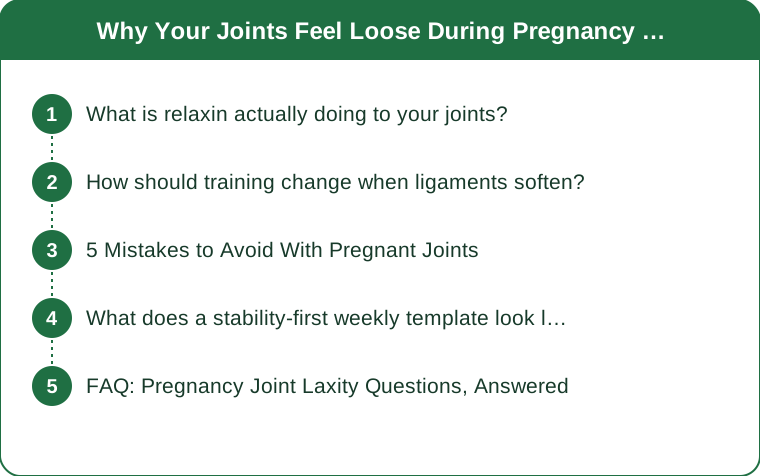
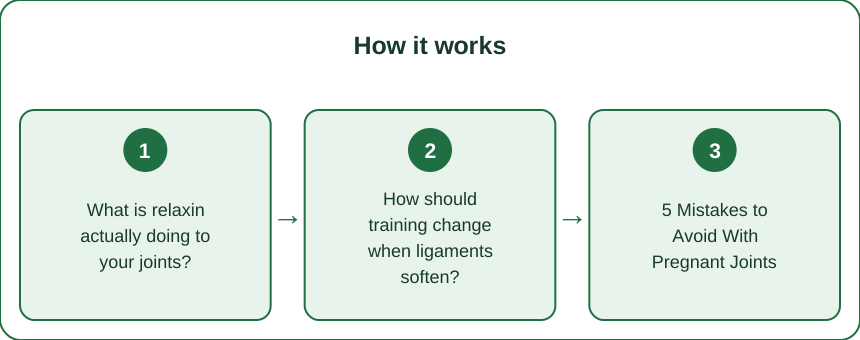
What is relaxin actually doing to your joints?
The mechanism explains every odd sensation - and points straight at the response.
The target is the pelvis; the effect is everywhere. Relaxin and its hormonal teammates soften connective tissue so the pelvic joints - the pubic symphysis in front, the sacroiliac joints behind - can yield during birth. But hormones travel in blood, not by postcode: every ligament in the body gets some of the memo.
Ligaments are your passive stabilizers. They are the straps that hold bones in alignment and stop joints at safe end-ranges without any muscular effort. Soften the straps and joints wander slightly further before anything says stop - which you feel as wobble, clicks, and a vague untrustworthiness in ankles, knees, hips, and even wrists.
The timeline is long. Laxity begins in the first trimester, persists through pregnancy, and does not switch off at delivery - joint effects commonly linger for months postpartum, longer with breastfeeding. This is a season to train around, not a week to wait out.
Add the mechanical plot twists. A shifting center of gravity changes balance calculations weekly, extra weight raises the load on every step, and a growing bump alters your gait - all landing on joints with softened straps. The rolled ankle on flat ground is this whole stack, not clumsiness.
Pain and laxity are cousins, not twins. Many people feel loose without pain; some develop genuine pelvic girdle pain - front-of-pelvis or one-sided back pain with stairs, rolling in bed, or single-leg moments. Looseness is normal physiology; escalating pelvic pain deserves a professional, ideally a pelvic health physio.
This is general information, not medical advice - clear exercise plans with your prenatal provider.
How should training change when ligaments soften?
One principle runs the whole show: muscles take over the stability job.
Strength stays - and becomes the point. Active muscle is the stabilizer you can still train. Squats to a comfortable depth, supported hinges, glute bridges, rows, presses, carries - moderate loads, controlled tempo, ranges that feel solid. Strong glutes and deep core muscles literally substitute for what the pelvic ligaments are temporarily not providing.
Control the range, not just the load. The new risk zone is end-range - deep lunges, aggressive stretches, wide unsupported positions where softened ligaments used to catch you. Train the middle 80 percent of every movement and let the last stretch of range wait a few months.
Go easy on the flexibility ambitions. Pregnancy yoga is wonderful; chasing new depth in it is the classic error. Laxity fakes flexibility gains - the extra range is borrowed from the straps, not earned by the muscles - and end-range enthusiasm is a common trigger for pelvic and SI joint irritation. Stretch for comfort, not achievement.
Narrow the asymmetric moments. Single-leg end-range work, big step-ups, and deep split stances load one side of a softened pelvis at a time - the exact pattern pelvic girdle pain dislikes. Keep single-leg work short-range and supported; think small step-ups near a rail rather than tall box climbs.
Swap surfaces and shoes for stable ones. This is the season for supportive sneakers over minimalist soles, firm ground over sand, and maternity leggings with a supportive over-bump panel - gentle compression around the pelvis genuinely helps many people feel more secure, and a bump band adds another notch of that support on walking days.
And keep the cardio that keeps its feet. Walking, swimming, cycling on a stable setup - rhythmic, low-wobble, and endorsed for nearly every uncomplicated pregnancy.
5 Mistakes to Avoid With Pregnant Joints
Mistake 1: Stopping everything to protect the joints. Deconditioning removes the one stabilizer you control - muscle - while the laxity stays. Inactive pregnancies commonly feel less stable, not more. Modified consistent training is the protective option.
Mistake 2: Chasing new flexibility because it suddenly feels available. The bonus range is ligament, not muscle - spending it is how end-range stretching sessions turn into week-long pelvic aches. Stretch to yesterday’s comfortable depth, not today’s surprising one.
Mistake 3: Ignoring early pelvic girdle signals. Pubic-bone twinges on stairs, one-sided low back pain rolling over in bed, pain standing on one leg to dress - early signals respond well to load tweaks and pelvic physio; ignored ones compound. Speaking up early is the whole game.
Mistake 4: Training in worn-out or wobbly footwear. Softened ankles plus a collapsing shoe is an avoidable combination. Supportive, stable sneakers - possibly a half-size up as feet change - are legitimate training equipment this year, and slip-on convenience matters more each trimester.
Mistake 5: Treating every session like pre-pregnancy benchmarks still apply. Loads, balance, and range are all on a moving baseline that changes weekly. The skill of this season is auditioning each movement against today’s body - keeping what feels solid, shrinking what feels borrowed, and logging effort by feel rather than by January’s numbers.
What does a stability-first weekly template look like?
A structure that covers strength, cardio, and the wobble - adaptable by trimester and always subordinate to your provider’s guidance.
Two or three strength days. Squats to a box or comfortable depth, supported Romanian deadlifts or cable hinges, glute bridges, rows, incline presses, suitcase carries - two to three sets each, moderate effort, two or three reps left in the tank. Wider stances often feel better for the pelvis; a chair or rail nearby turns balance moments into non-events.
Daily-ish walking, sized to the day. Twenty to forty minutes on stable surfaces in stable shoes - with a bump band on the days the pelvis wants backup. Walking keeps the calf pump, mood, and stamina going at wobble-proof intensity.
Two short stability snacks. Five minutes: supported single-leg stands, slow heel raises, side-lying leg lifts, bird dogs with a short reach. Small, boring, and precisely the muscles that cover for loose straps - ankle stabilizers and glute medius most of all.
Gentle mobility, capped at comfort. Cat-cow, supported hip circles, chest openers - daily if pleasant, always inside the range that felt normal pre-bump. Comfort is the ceiling; achievement is postponed.
The listen-and-adjust loop. A movement that leaves the pelvis grumbling for a day gets shrunk - shorter range, more support, lighter load - before it gets removed. Most complaints respond to modification; escalating or persistent pelvic pain graduates to the pelvic physio, who has an entire toolkit for exactly this.
And bank the postpartum patience now. Laxity outlasts delivery by months, so the stability-first rules - middle ranges, muscle support, stable shoes - carry into the fourth trimester and beyond. The habit built now is the recovery plan later.
FAQ: Pregnancy Joint Laxity Questions, Answered
Why do my joints feel loose during pregnancy?
Relaxin and other pregnancy hormones soften ligaments body-wide so the pelvis can yield for birth - ankles, hips, knees, and wrists all borrow some of the effect. Add a shifting center of gravity and extra load, and the wobbly, clicky feeling is standard physiology rather than damage.
Is it safe to exercise with loose joints while pregnant?
For uncomplicated pregnancies, guidelines encourage it - strength work in controlled ranges and stable cardio are exactly how you compensate, because muscles take over the stabilizing job. Clear your plan with your provider, and treat pain - especially pelvic pain - as a signal to modify and ask.
Should I stop stretching during pregnancy?
Stretch for comfort, not progress. Laxity donates fake range that comes from ligaments, and chasing it is a classic trigger for pelvic and SI irritation. Keep yesterday’s comfortable depths, favor supported positions, and skip aggressive end-range holds until well postpartum.
Why does my pelvis hurt on stairs and rolling over in bed?
Those are signature single-side loading moments for a softened pelvis - the pattern of pelvic girdle pain. It is common and very treatable: shorten strides, take stairs deliberately, roll with knees together, and see a pelvic health physio early rather than pushing through.
How long does pregnancy joint laxity last?
Through pregnancy and typically for months after delivery - often longer while breastfeeding. Keep the stability-first habits - middle ranges, strength work, supportive shoes - through the postpartum season rather than snapping back to end-range training at week six.
TL;DR:
- Relaxin softens ligaments everywhere so the pelvis can yield for birth - the wobble is engineering, not injury.
- Trade passive stability for active: strength train in controlled middle ranges and let muscles hold the line.
- Skip end-range stretching and big asymmetric moves; the bonus flexibility is borrowed from the straps.
- Stable shoes, supportive maternity leggings, a bump band, and balance snacks cover the daily wobble.
- Pelvic pain gets early attention and a pelvic physio; laxity itself outlasts delivery by months.
The body loosened the hardware on purpose and handed the stability job to your muscles. Train them for it, respect the borrowed range, and the wobbly season stays a season.
See It in Motion
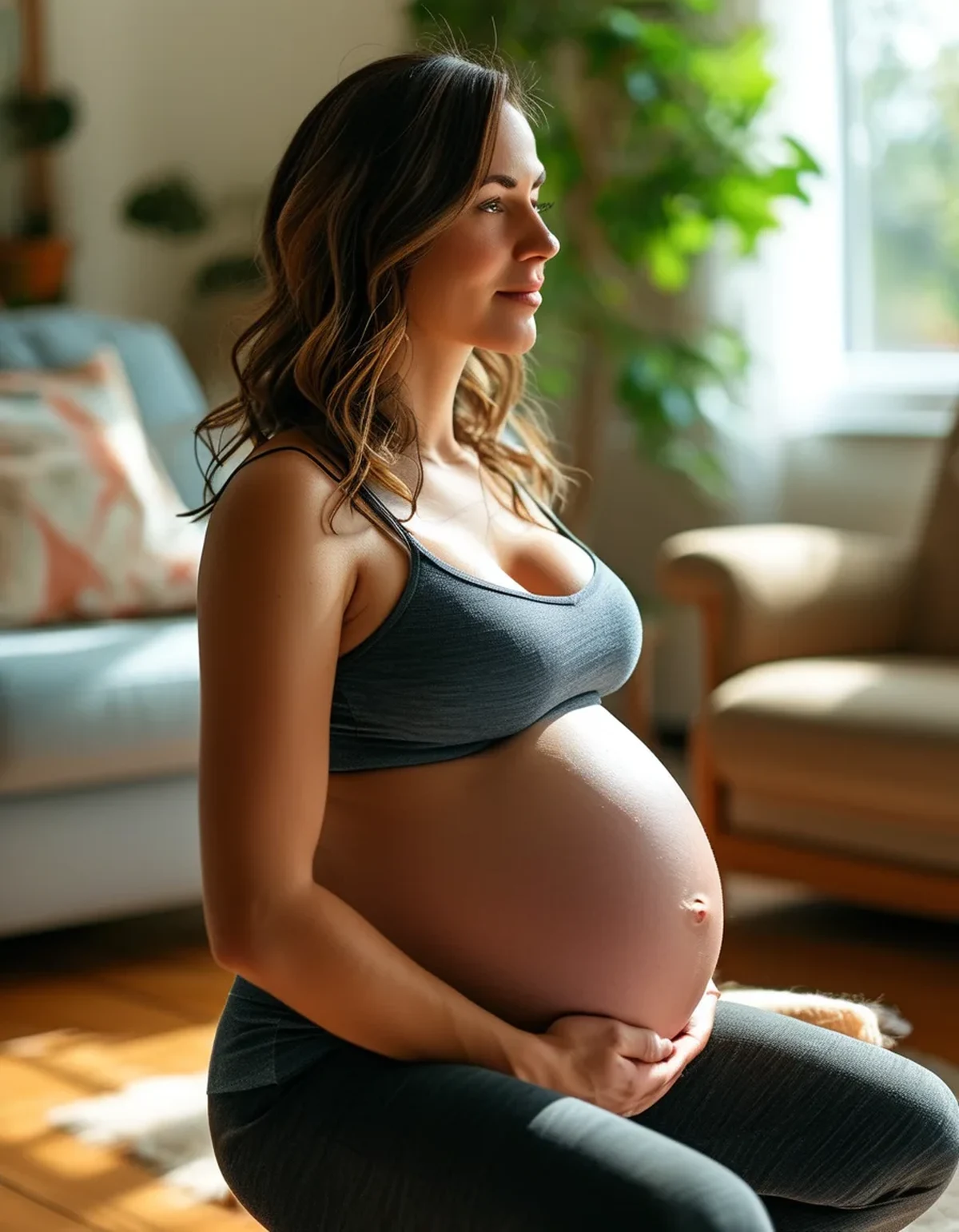
Seen here: High Waist Yoga Leggings with Side Pockets — shop it on bubblelime.com
Keep Reading
This article is for general informational purposes only and is not medical advice. It is not a substitute for professional diagnosis or treatment. Always consult a qualified healthcare provider about your individual situation, especially before making significant changes to your diet or exercise routine.